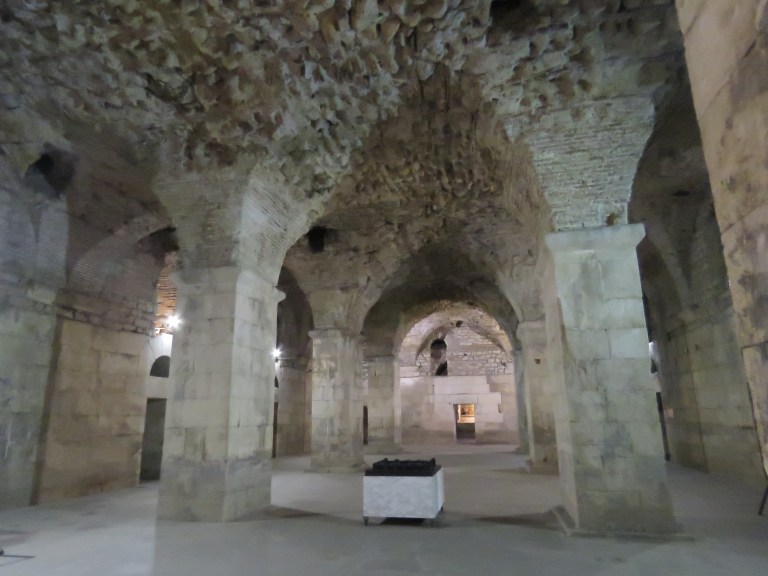
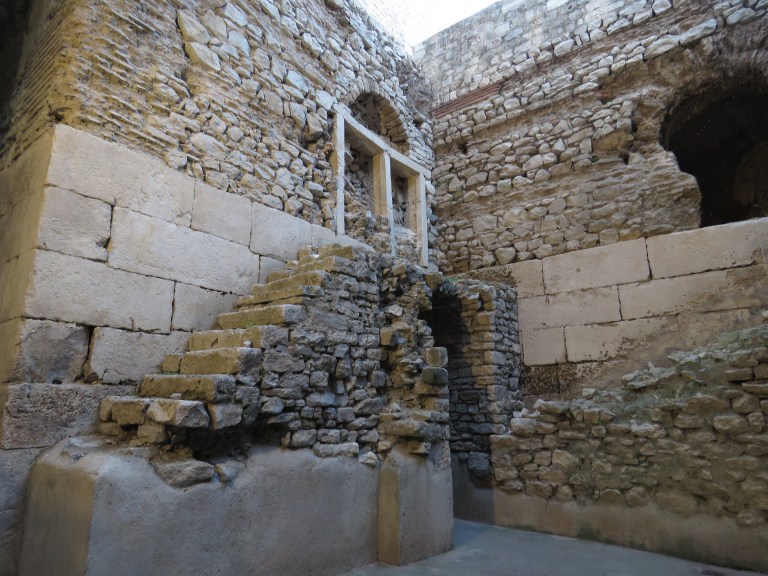
The pigeons have taken over Diocletian’s Palace. A sad state of affairs and I imagine he is observing this from some other place and that he is extremely unpleased. I know that I was unpleased as I wandered through the subterranean structures of the palace and kept encountering groups of these damn birds, cooing and shmooing, and yes, pooing. It was fairly dark in these vaults, downright eerie at times, because you heard rustling noises and had no idea who or what was making them. That was about as close as I got to a haunted house on Halloween.
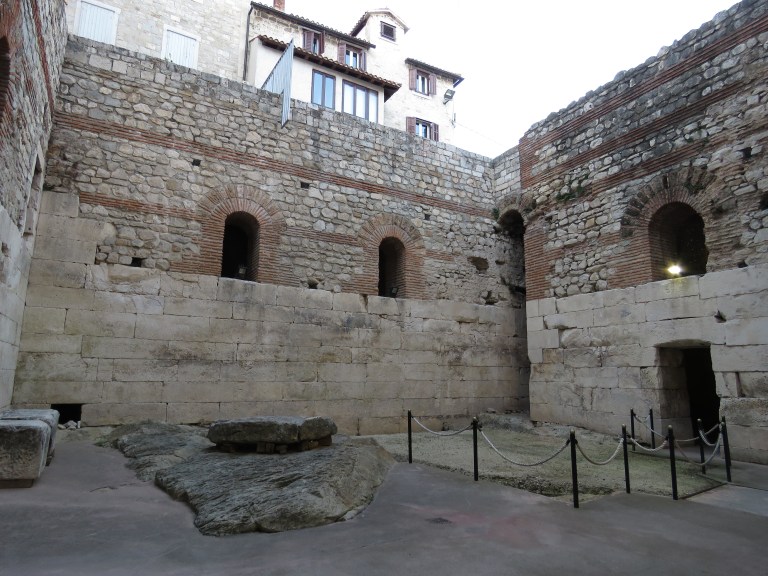
Split – on the Dalmatian coast in Croatia, this is where Diocletian’s Palace is located. In fact, the entire old town of Split is basically the palace. Over the centuries people started to build around the walls and on the remains of palace buildings. It is a compact warren of narrow winding alleyways that suddenly burst into small squares, usually with a statue decorating the center. This place is older than dirt. It goes back to the 4th century BC when it was settled by the Greeks.
Eventually the lands in Dalmatia were swallowed up by the Roman Empire and Split became the capital of their Dalmatian province. Diocletian decided to retire here – which makes sense as he was born in Salona which is right up the road from the palace. So really this is a Roman emperors idea of a retirement home. It is famous for being the most well preserved Roman palace in the world. In particular the vault work underneath the palace. Huge arches of stone blocks that have been preserved for 2000 years…
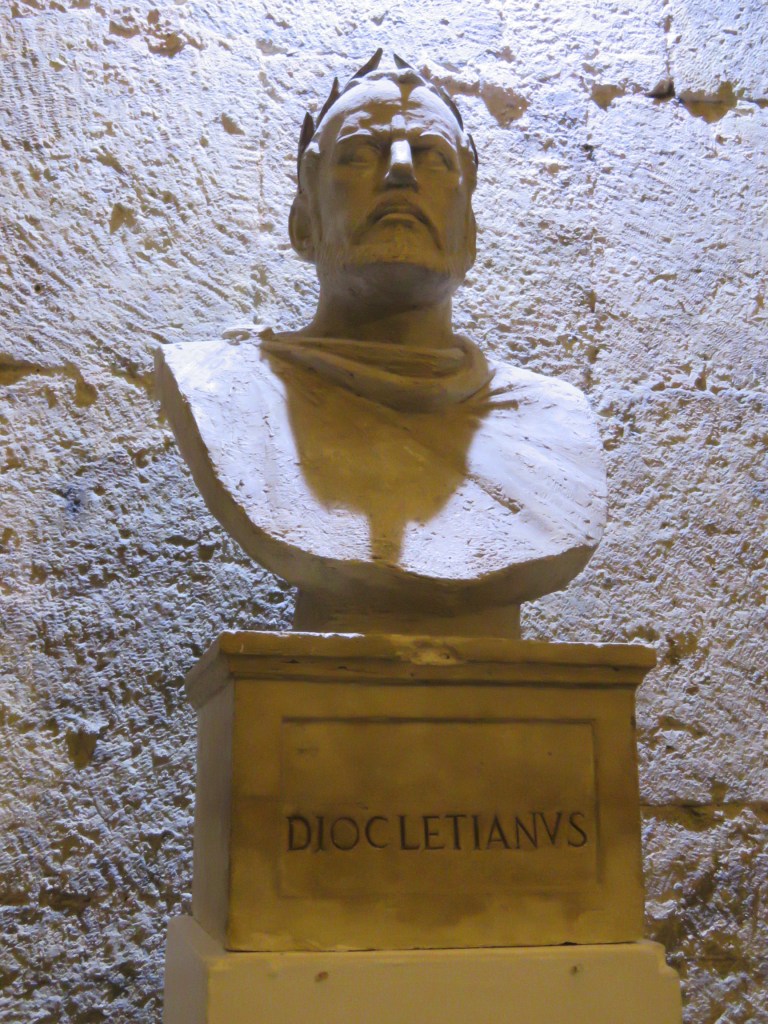
HIP FACT: Diocletian ruled from 284-305 and was extremely productive as emperor. He is credited with stabilizing the Roman empire through bureaucratic and military reforms, which preserved the empire for another 100 years…
SECOND HIP FACT: Ok, this one is not so cool – he allowed an extremely bloody persecution of Christians to take place for about 10 years or so. But the Christians were numerous at this point and a scant 24 years later Constantine became the first Christian emperor and Christianity became the main religion practiced in the empire.
LAST HIP FACT: This one is actually interesting, Diocletian is the first (and only) Roman emperor to abdicate the throne! It does sound like there may have been some coercion (by his son-in-law, no less), but he did put himself out to pasture…
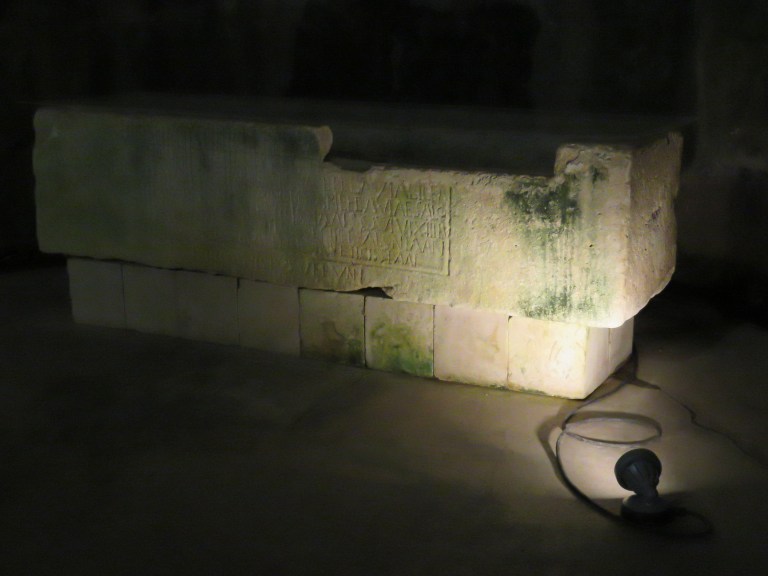
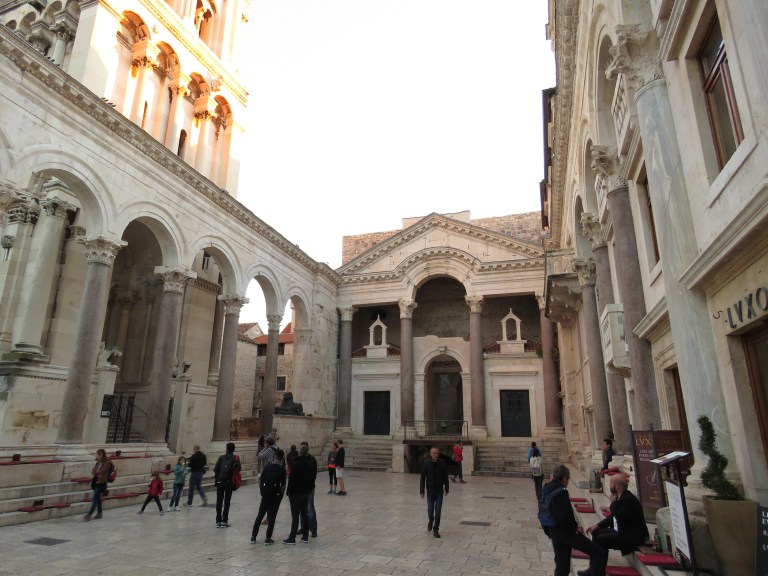
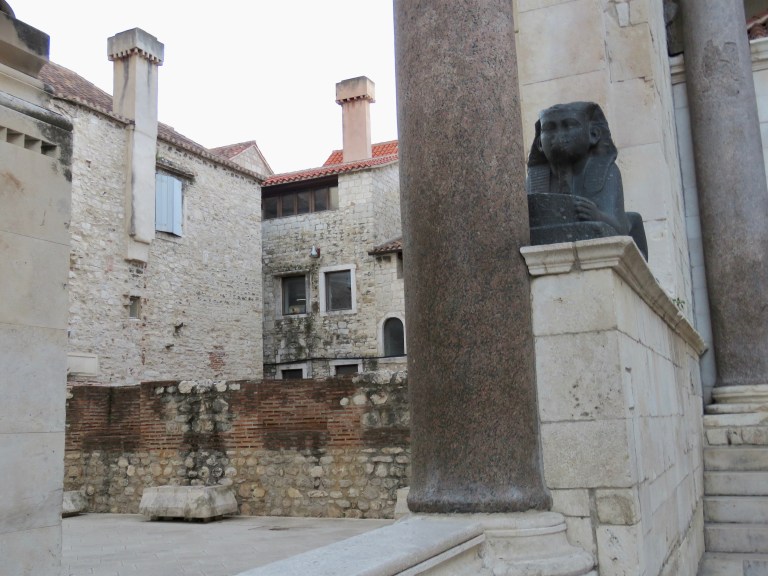
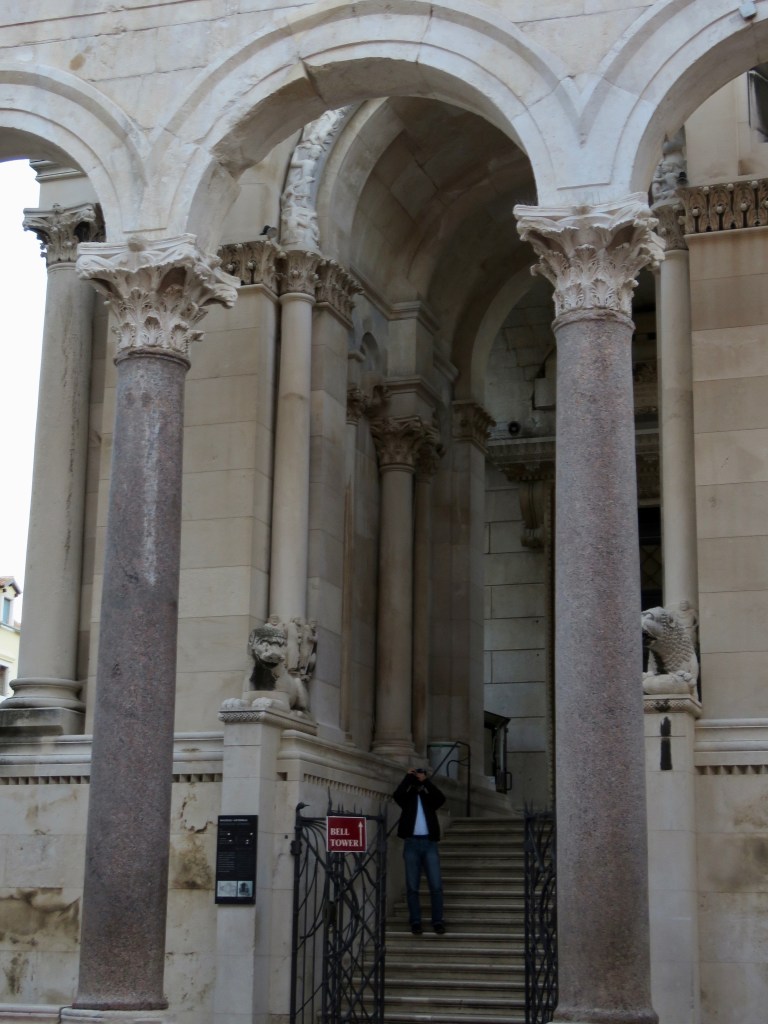
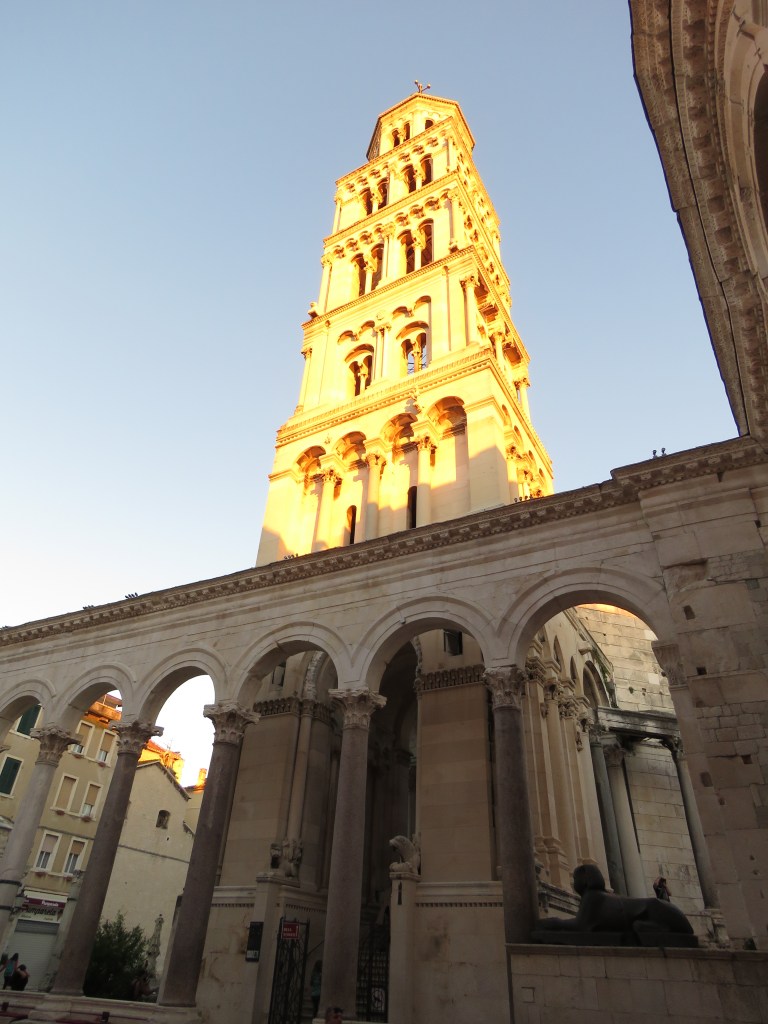
There is a central part of the old town called the Peristyle, where there are some ancient statues and remnants of palace buildings and rooms, including a fabulous sphinx from Egypt that is 3,500 years old! Diocletian spent some time putting down revolts in Egypt and must have picked this bad boy up on his travels. Ironically, this is where Diocletian had his mausoleum built and several centuries later the townspeople built a church on that very spot – the church of St. Domnius. Divine retribution?
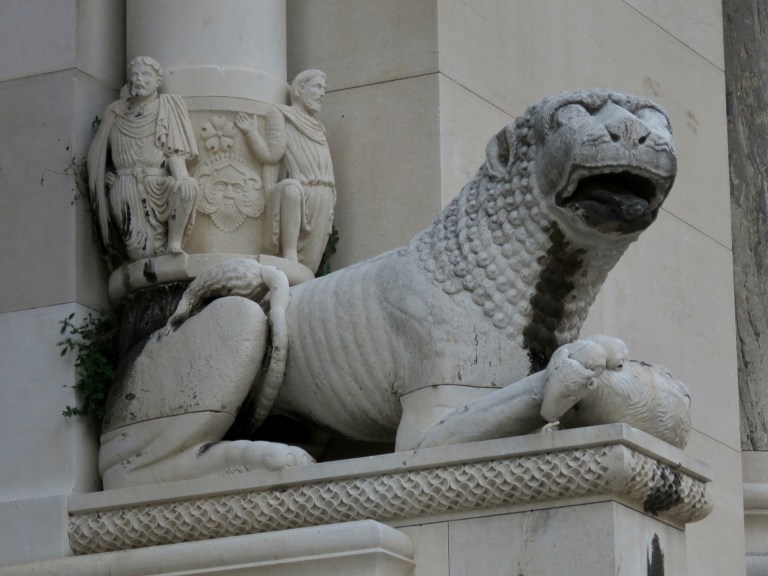
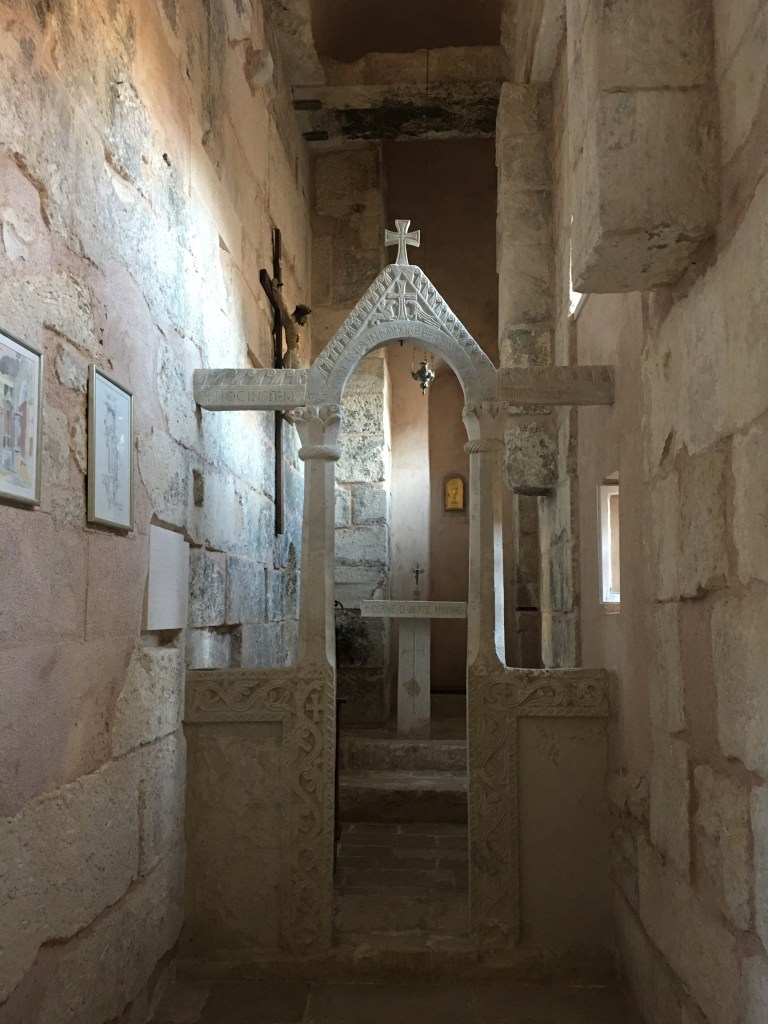
Speaking of churches, I found the tiniest church known to man in Split. It is called the Church of St. Martin. It is maybe 5 feet across and 30 feet long – sandwiched between two other edifices. This one dates back to the 5th or 6th century. It was actually peaceful and charming though must have had a teeny-tiny congregation – or else been someone’s personal chapel…
Besides getting lost in the maze that is Split, I went further afield to check out Trogir. This is another little burg close to Split – though it did require a bone jarring, teeth rattling, bus ride on a vehicle that smelled like the B.O. was built-in to the upholstery (I must really hate to travel by bus…).
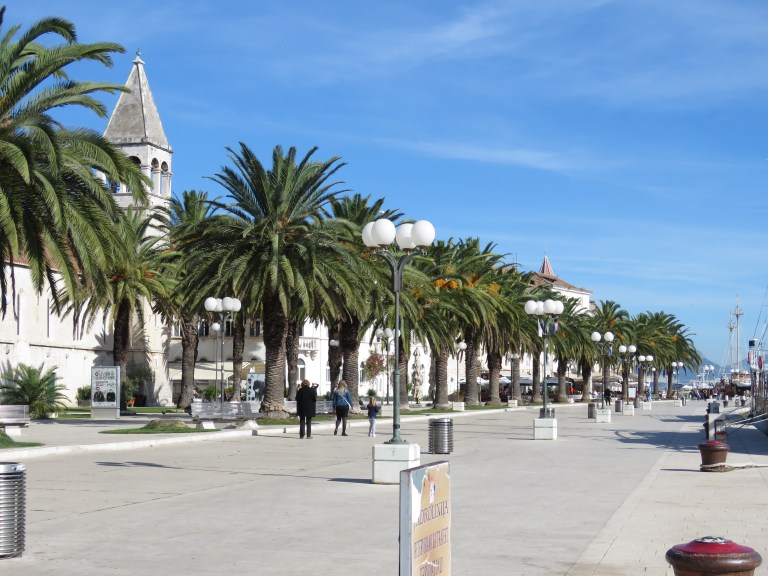
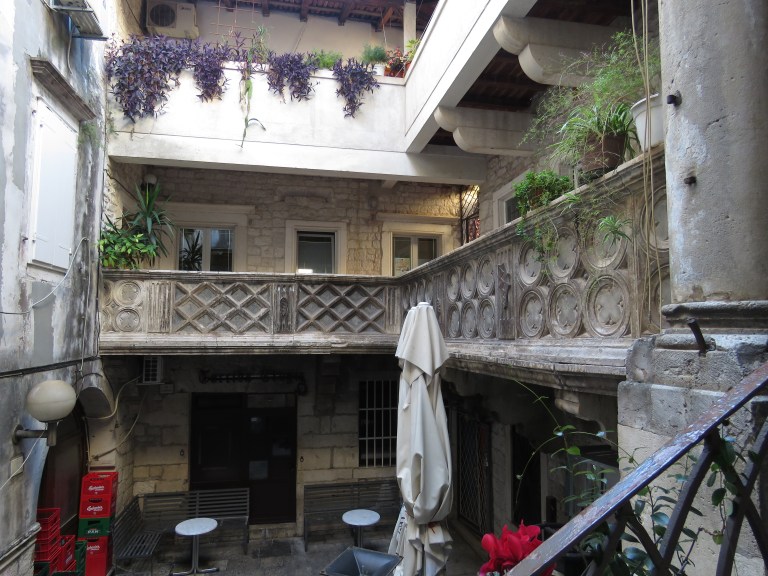
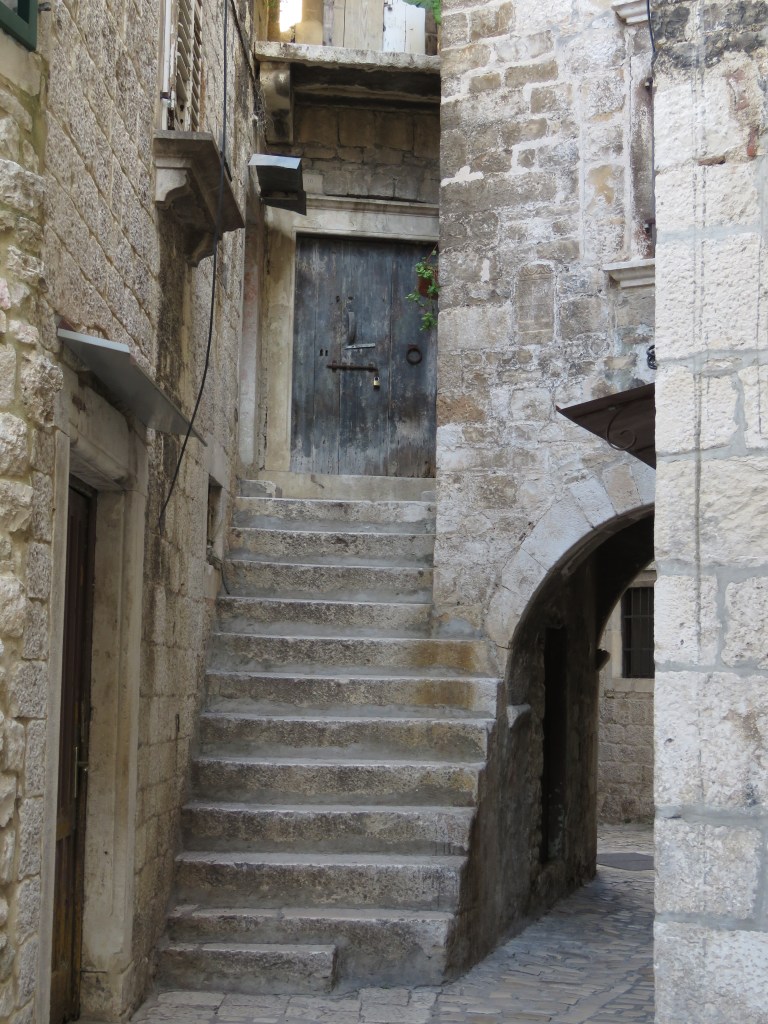
Trogir is an island situated a stones throw from the mainland (you just walk across a short bridge and you’re there). It has more intact medieval town walls and a lovely Riva (basically a promenade) walk that is more compact and a bit less touristy than what you find on the Split Riva. I thought it was lovely and has some great architecture from the 15th century. Like Split, people continue to live in and around these ancient buildings. Talk about your money pits, maintaining one of these buildings must be extremely pricey!
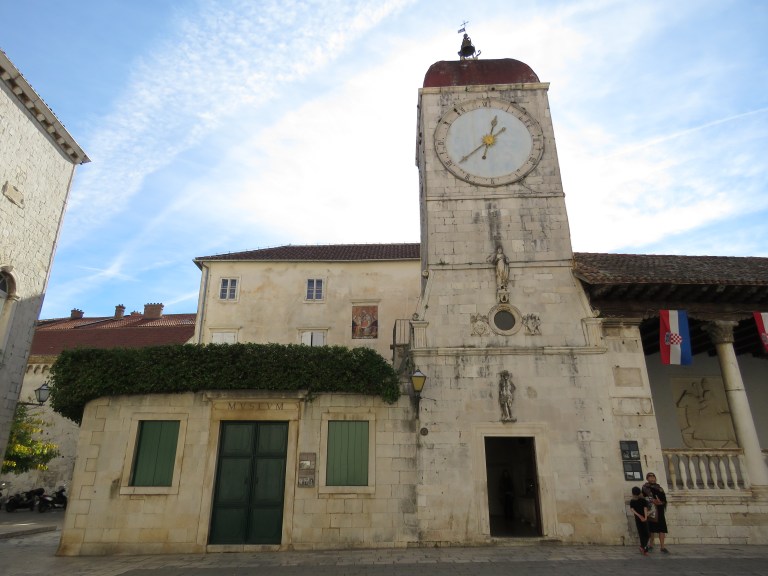
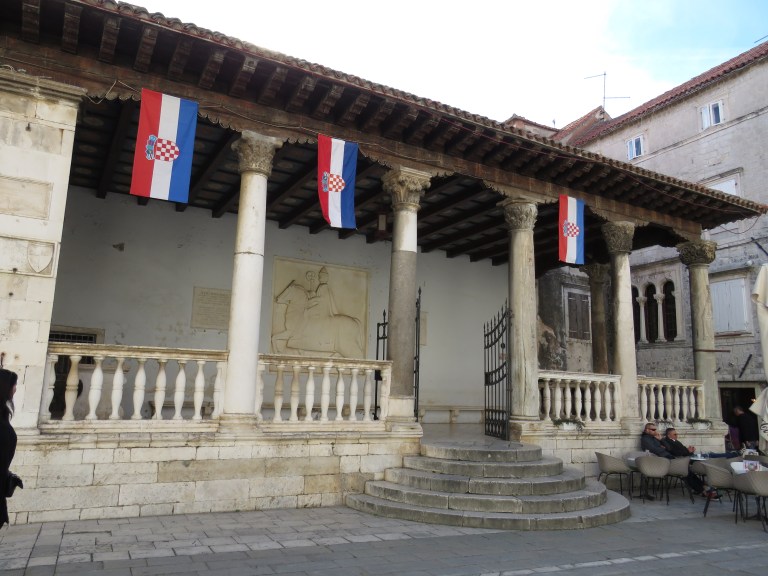
I happened to be exploring Trogir on All Saints Day – which is a national holiday here … bummer. This meant I could not get into any of the museums or churches. But they did have the memorial rooms open. I had no idea what this was in reference to, but realized that they were referring to those who had lost their lives in the Balkan wars 25 years ago. The Croatians call it the Homeland War. Unbelievable to think that a short time ago much of the Croatian cities were a mess, not to mention the thousands of displaced and homeless people. Upwards of 20,000 people died between 1991 and 1995. And I don’t know if that is counting the deaths from all of the involved countries, I think that is just within Croatia. Sigh.
Sadly, I eventually had to leave Split (on yet another harrowing bus ride) and move down the coast to Dubrovnik – which was probably my favorite stop on the Dalmatian coast. If I can get my act together to write some more I’ll tell you all about it!
 The Minkey Blog