Not for the faint of heart – to travel in Botswana at the start of the rainy season. While the scenery is spectacular, neither you, nor anything you took into the interior will ever feel dry again. That was a small amount of hyperbole – but you get the picture.
I went from the Namib Desert where the temps soared to over 50 degrees Celsius, to Chobe National Park, Moremi Reserve on the Khwai River, and the Okavango delta, where there were much cooler temps and frequent downpours – sometimes lasting for 8 or more hours!
My first foray into this crazy place where there are no fences – (because Botswana believes the animals should move unhindered across the countryside) – was via mini-van. My camp transfer from Victoria Falls in Zimbabwe over to Kasane, Botswana and Chobe National Park. As we were driving on the highway (two lanes – major thoroughfare) there were multiple instances where wild animals crossed the road directly in front of us. I’ll try to include a picture below to give you an idea. Elephants, baboons, giraffe and buffalo … Not to mention there seem to be warthogs wandering around everywhere, even in the city (Kasane is pretty small … city may not be the right term).
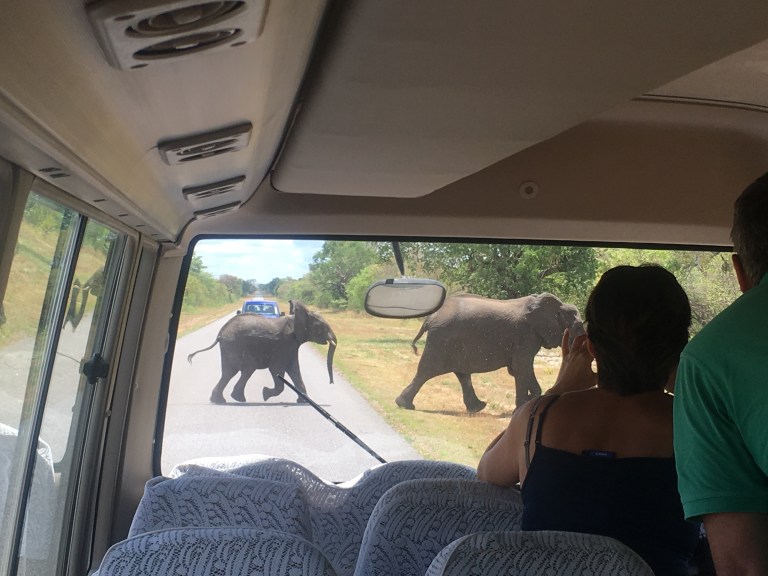
Yes – for real, they don’t have fences … Botswana state policy. Zimbabwe and maybe Zambia and Angola do this as well. Botswana also has set aside 30% of the country for animals – so there is virtually no infrastructure, just service roads, and occasionally villages and of course, safari camps. Tourism is big – and most of these camps only provide for a small number of people – like 20 or less. You can’t stroll about at night because you could run into a critter – and they are not kidding. I stayed at two camps where the hippos came right out of the water at night and walked around the camp tents and along the banks by the camp. Damn hippos – kept me awake at night as they grunted and chuckled at each other – they make the oddest sounds! Another night I listened to the screams of a baboon – obviously a warning type of call, over and over – and hoped I would not hear sounds of a scuffle and an expiring baboon… Next morning there are lion tracks around our camp area … oh yeah people, it’s for reals!
My arrival at Chobe Elephant Camp coincided with the first major rain of the season (of course). HUGE thunderstorm – it poured rain all night. Sadly, it rained on our first evening game drive as well. Understand that they take you out early in the morning and then in the late afternoon/early evening – as those are the best times to see the animals. The jeeps that you go in are kitted out with three rows of tiered seating – so you can get a good view wherever you sit. They have a top, but there are no sides or windows on the vehicle and the guide usually puts down the windshield as well – so you really feel very exposed not only to the elements but the animals as well! Some of us were a tad bit concerned about how exposed our flesh was to the predator cats, for instance, or the elephants. In all of my game drives there were at most four people — so we had tons of room in the jeep.
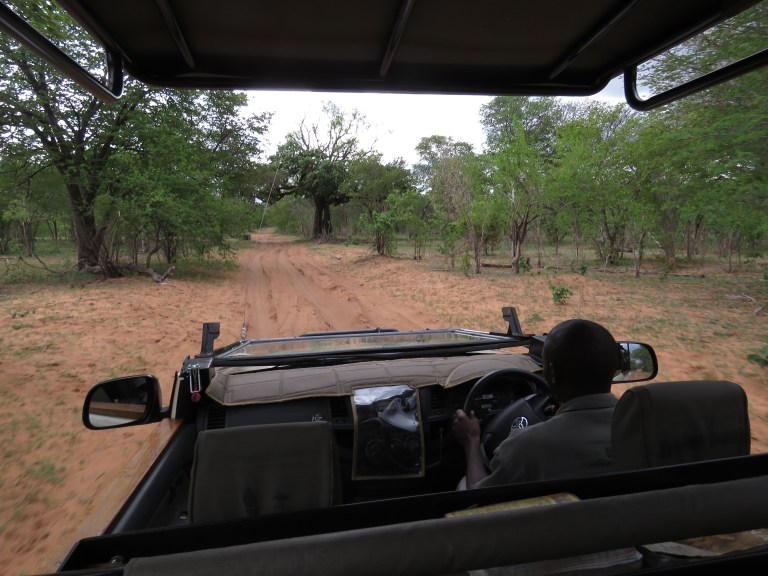
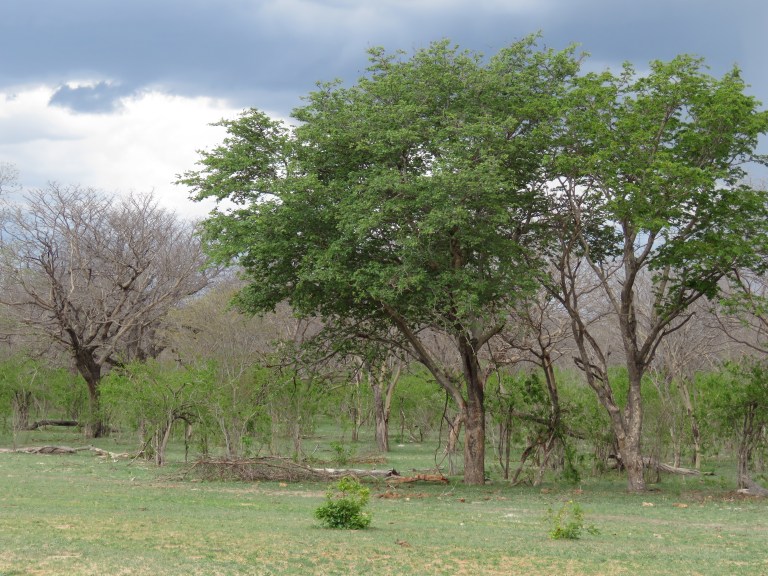
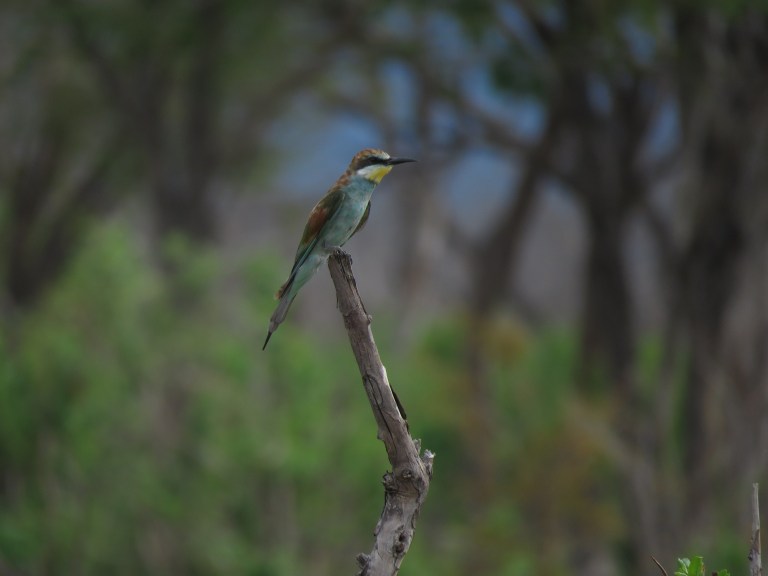
So it rained. Constantly. That first evening ride we got only so far towards the Chobe river when the skies opened up and sheets of rain came down … we had to head back. Luckily they have fleece-lined and hooded ponchos in the jeep – which did an admirable job of keeping us dry — but the wind driving rain sideways meant we still got fairly soaked! Really all I cared about was keeping the good camera dry – and it survived Botswana and remains in working order. Even with our short game drive I still saw several interesting birds…
These safari camps tend to have separate bungalows or tents that you stay in and then a common lodge type area where meals are served and where you can lounge about and relax and even enjoy a cocktail. Unfortunately, they are all very OPEN. So creepy crawlies, wind, rain, baboons, warthogs, all wander through these areas. No screens, but definitely screens on your little cabin – though there were still critters that made it inside. In Chobe I shared my little bungalow with three geckos … who chirped at each other in the night. I was perfectly fine sharing with these guys because I knew they were eating the microscopic critters and the mosquitos. And we had words during the day where I encouraged them to hide up in the ceiling – as I did not want to be startled by a gecko around the bathroom sink or anyplace else for that matter. I liked the Chobe camp the most, because I was in a concrete bunker – with really good screens on all the windows — and a nice indoor and outdoor shower, depending on your pleasure. You could also charge things in your room and had halfway decent lighting. As I went further into the wilderness my accommodations became less cozy, shall we say. They are big users of solar power for these camps – which seemed to work well, but a few had generators as well, kind of noisy on top of all the night sounds from the bush!
I saw countless animals in my game drives through Chobe. And we took a riverboat ride too, around Sedudu Island. That was during the Longest Day – 12 hours riding around in the range rover jeep, the boat ride, and then eventually back to camp. And on the Longest Day, I discovered that there are no toilets in the bush. Damn. Plus, the guide does not want you to stray too far from the jeep, so one needed to find a very leafy set of bushes to hide behind. Let’s just say that my water intake slowed down dramatically on this day.
Botswana is known for it’s elephants, and I must have seen hundreds. Not only did I see them, but I was parked within inches of several, both males and females who (I swear) watched me very carefully. Yes, they were usually munching on the underbrush, but sometimes they were patiently (or not so patiently) waiting to cross the road – so waiting for our jeep to move out of their way. There were tense moments now and then, like when a male elephant crossing the road decided to lunge towards the front of our jeep, shaking his head, and I thought any second now, he will break into a run… But no, he angled back to the others and continued towards the river.
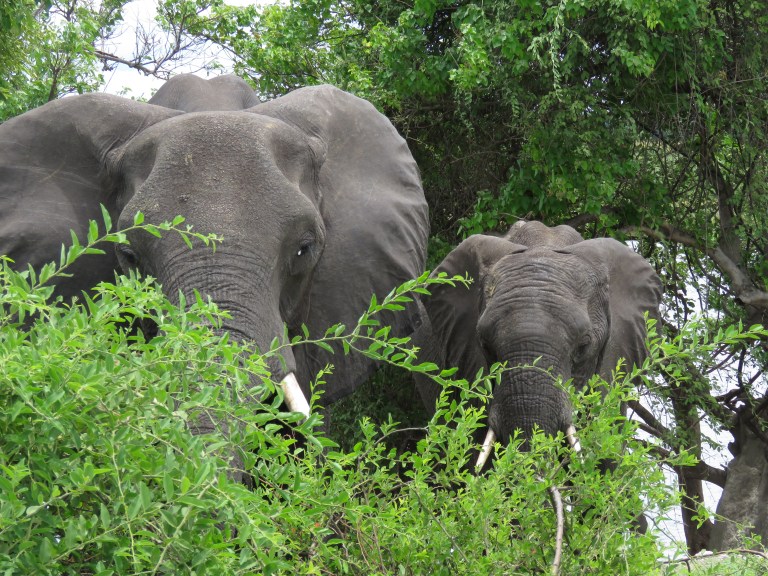
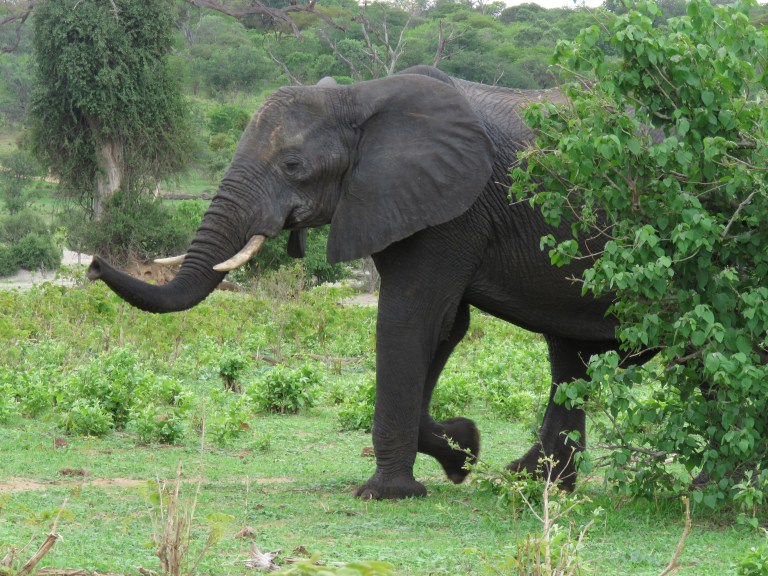
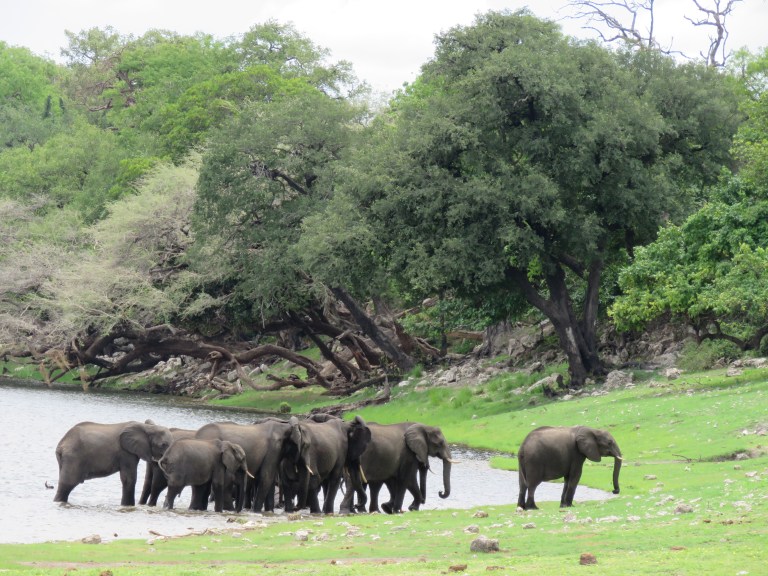
African elephants seemed much larger to me than Asian elephants (my only comparison – from Thailand several years ago). They are curiously quiet. Indeed, we would park right next to them and not hear a sound short of the tearing up of plants and bushes. Belying their bulk they saunter silently across the roads and through the forest. They flap their ears like wings to cool themselves off and paw at the ground looking for roots. They are very sociable animals and we watched how carefully they protected the babies – especially when in the river (probably from crocodiles, which were plentiful!).
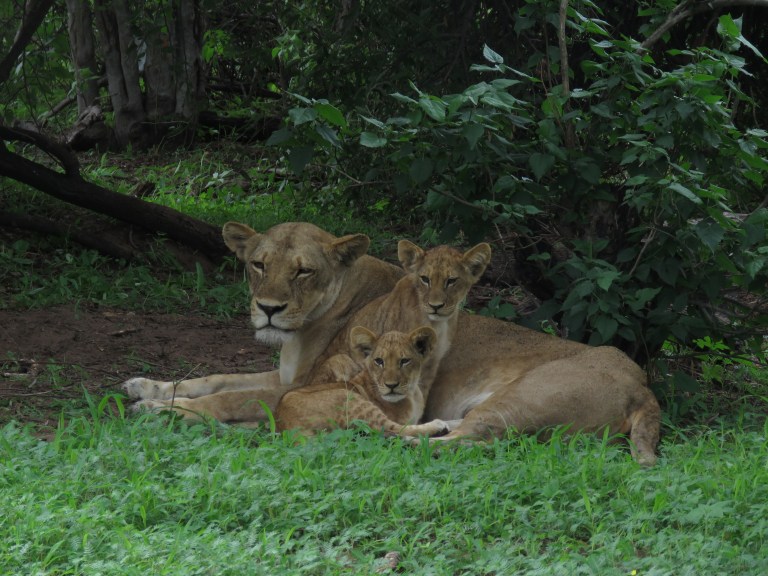
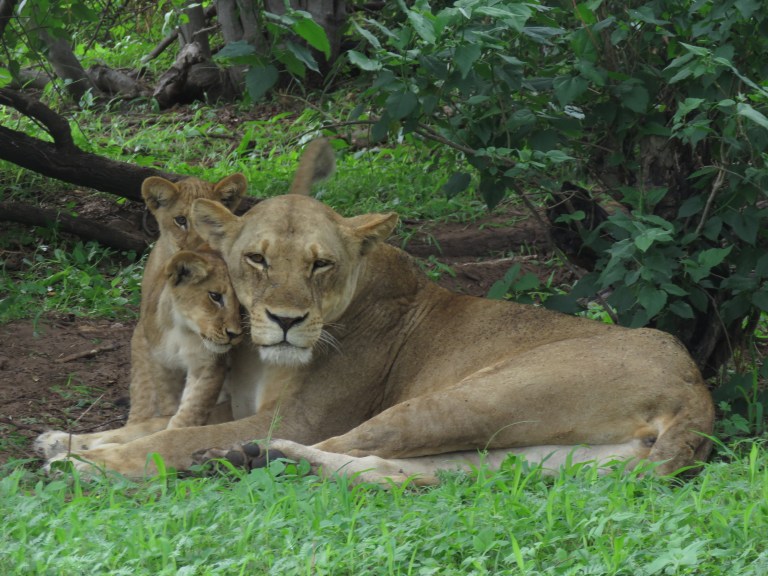
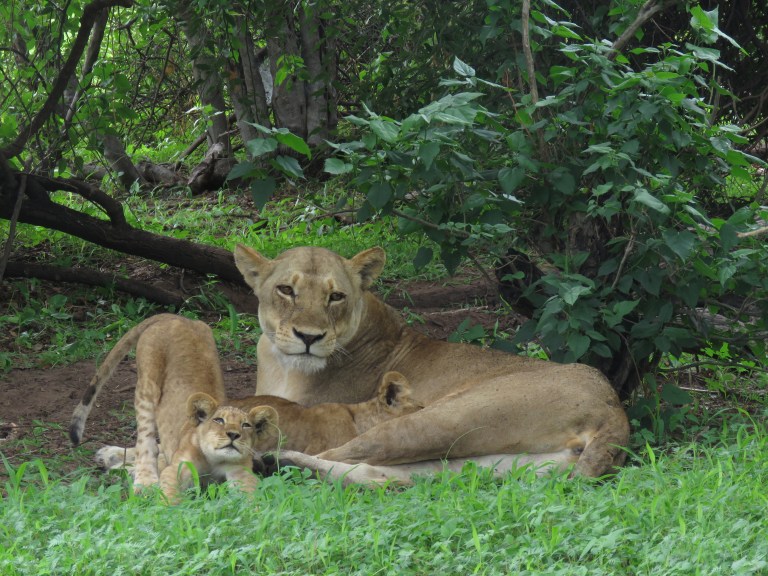
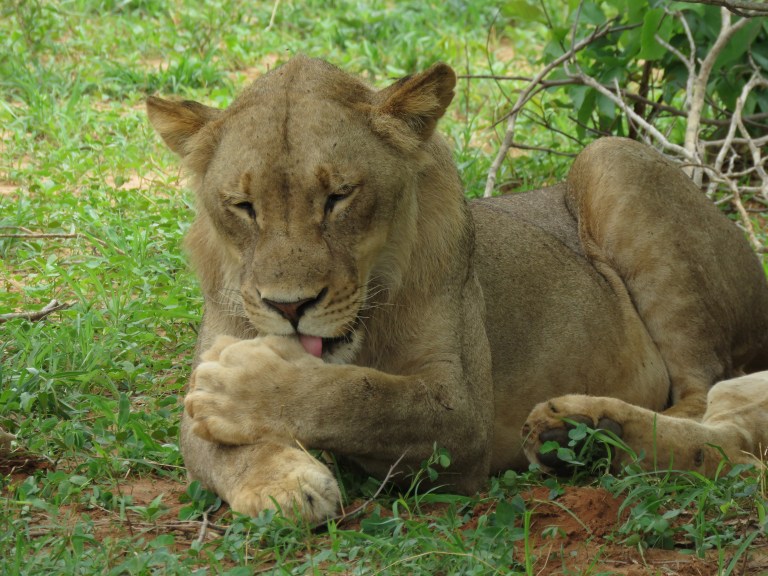
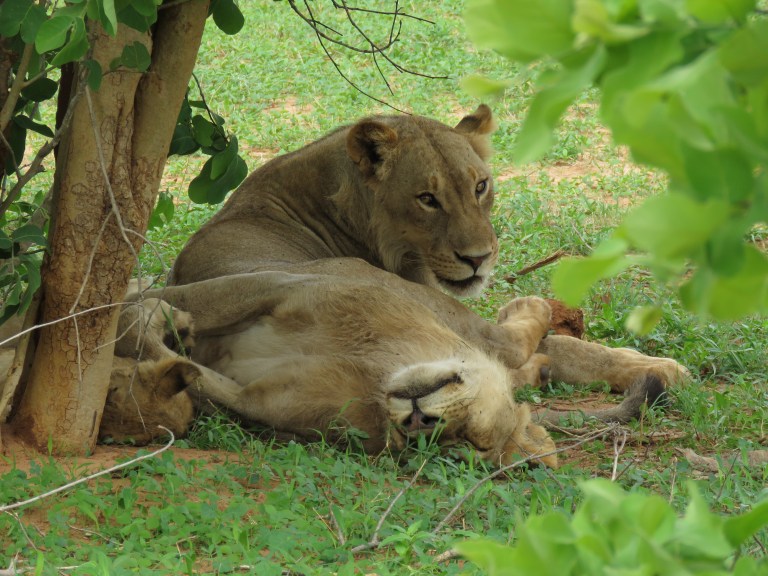
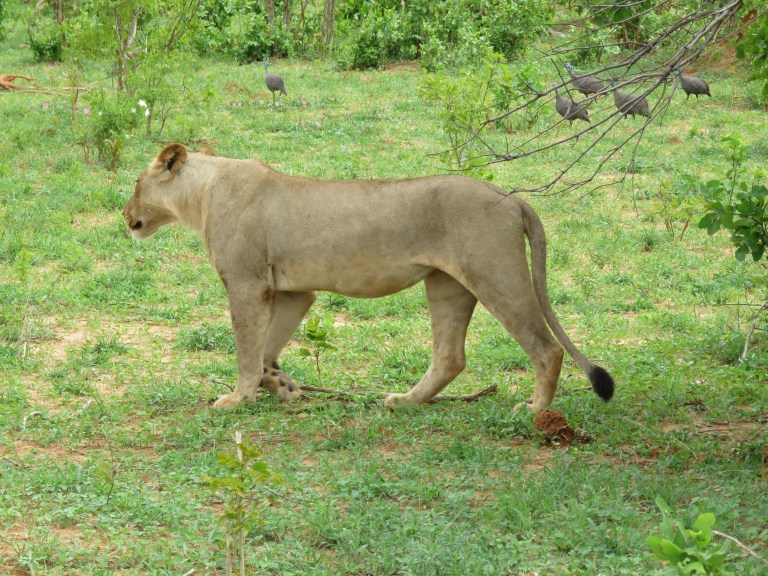
Besides the elephants we came across two groups of lions. The first was a lioness and two cubs – barely spotted as they were flat on the ground underneath a bush. The cubs were still nursing and apparently the mothers stay some distance away from the rest of the pride when they have nursing cubs. It is hard not to think of domesticated cats when looking at lions – they seem to have many similar facial expressions. But then you glance at the size of the paws and realize these are no house cats! This lioness seemed very relaxed, trying to get a little shut-eye perhaps, but the little ones woke up and began to pester her for attention and food. Those cubs were absolutely adorable – I took far too many pictures of them!
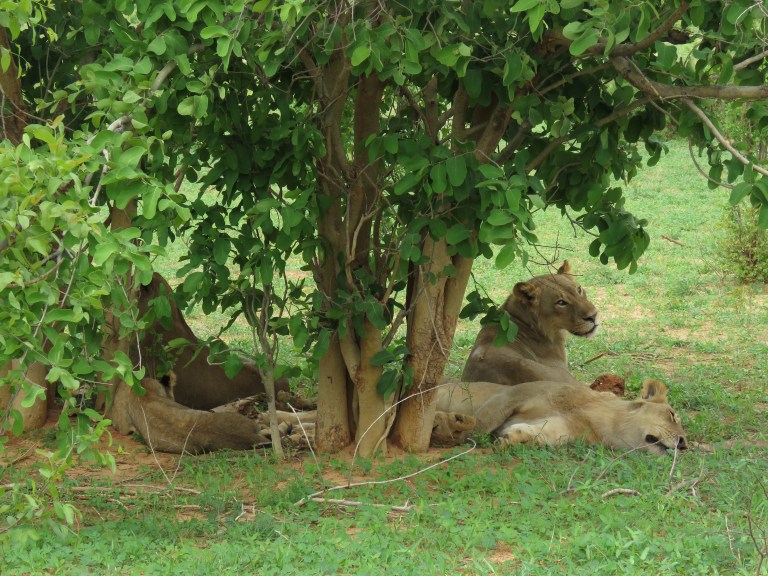
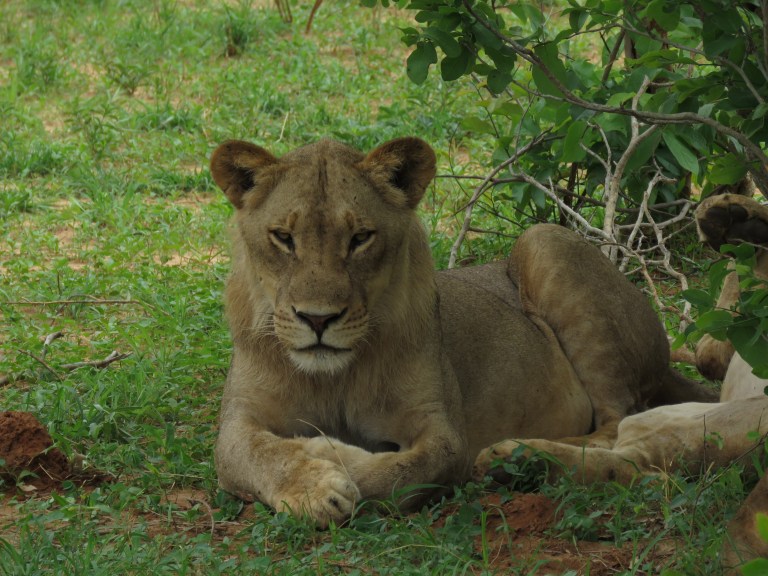
The second group of lions was the rest of the pride – mostly males. They were juveniles, most with just the beginnings of a mane. All clumped together snoozing – they did not seem very frightening. Until they began to sit up and watch us, with those calculating feline eyes. Some of us were a bit nervous when they stood up and walked around – when you realized they were actually fairly large and muscular animals. Luckily they generally ignored the jeep. The guides tell us that they are truly the king of the jungle – as they can kill and eat everything else. With the exception of the honey badger.
Hippos and more hippos… I did not have a clue and was amazed at how many hippopotamuses (hippopotami?) there were in Botswana. They were everywhere – granted everywhere there was water – as that is their ‘safe place’. Supposedly hippos are more active at night and creep out of the water to mow through the riverside grasses. We saw them out of the water in the middle of the day as well – though usually not too far away from water. Usually there would be 30-40 hippos all chummy together in the middle of a river, stream or lagoon. This meant they were probably all related and in the same pod – because hippos are fairly irascible creatures that constantly fight with each other over territory and the ladies. Yes, that’s right – the Harem – one male hippo gets all the ladies to himself.
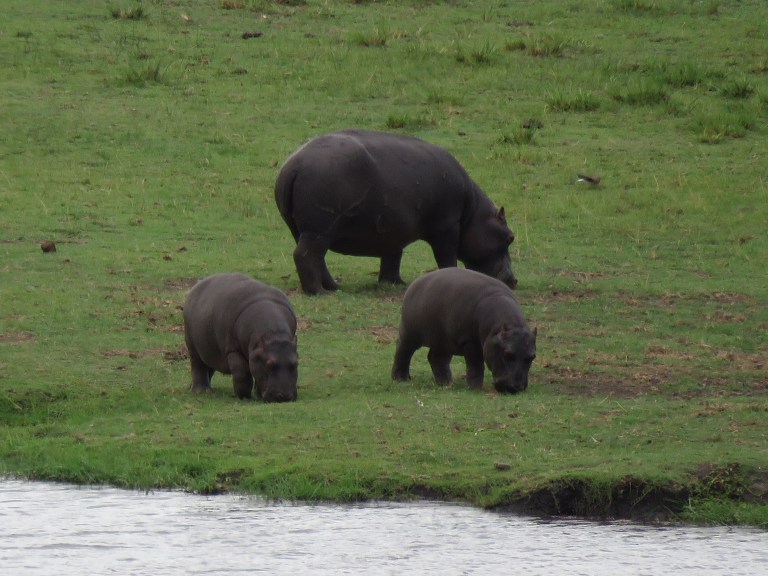
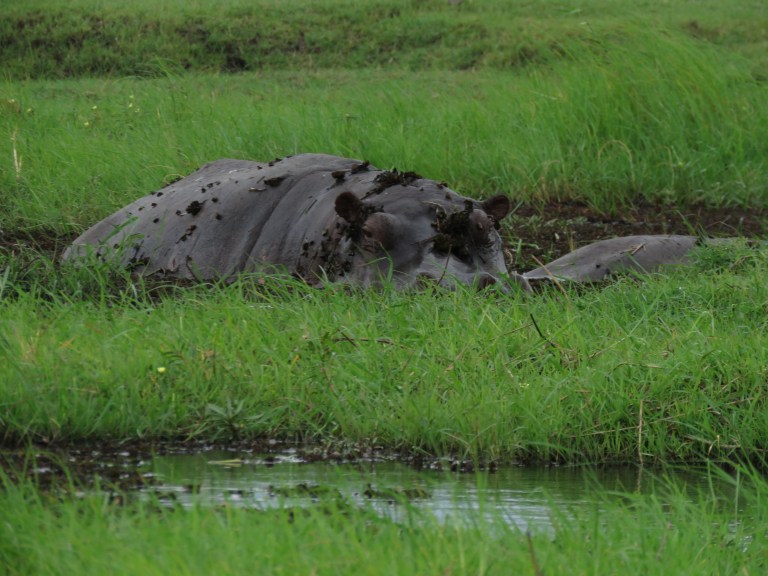
The hippos were oh so spooky, because they tended to stare at us non-stop whenever we were parked near them. We usually took our breaks in front of big hippo hangouts – so were perhaps 25 to 50 feet away from them. The guide says as long as we don’t get between the hippo and the water – all is good. Hippos get a bit psycho if they don’t have a clear path back into the water. AND – they are the number one people killer out there, as far as wild animals go… It’s the jaws… sometimes we had the Threat Display, where mister hippo would open his jaws and show off his pearly whites. That is practically a 180 degree opening of the mouth – and when that thing snaps shut – yowzah. I was generally petrified that the hippos were going to assault us – they practically ooze mean and ornery.
I have so much more to share – but really should get this one out the door – so – New Year’s Resolution – to post more frequently!!!
 The Minkey Blog
Those lion cubs were adorable! The little comments were fun, too. 😀