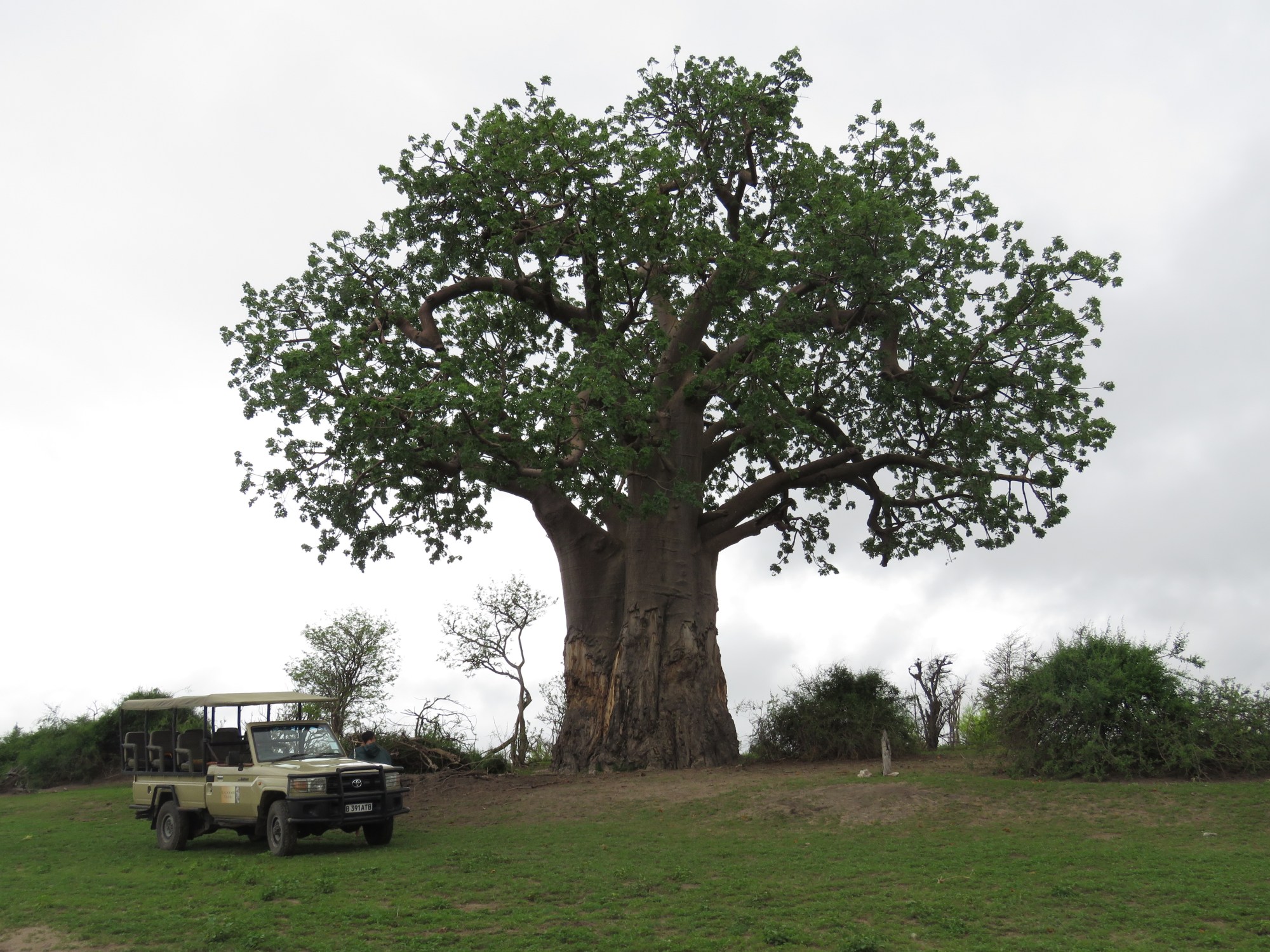
Minkey – please oh please tell us more about all the wild animals you saw in Botswana! Well alrighty then, I’m happy to oblige.
It’s hard to describe your feelings when suddenly you find yourself face to face with an animal that is not behind a fence or enclosure. That is how most of us have related to elephants, lions, crocodiles, baboons, and so on. I occasionally would check my fitbit to see if my heart rate had actually increased – not sure that it ever really did, but I certainly was contemplating exit plans if one of these animals decided to charge the jeep or hop into the jeep. Most of those plans involved rolling into a ball to protect the internal organs and/or playing dead, because that would have worked (HA). Of course, not all of the animals are dangerous. There must have been 50 different types of antelopes running around and the guides used their behavior to gauge whether or not there were predators in the area.
In Chobe we kept coming across herds of impala. It was seriously like impala central. They outnumber all the other antelopes combined. Like most antelopes the males and females are in separate groups and the females are responsible for bringing up the babies (naturally). And, since it was the rainy season there were scads of baby impalas everywhere. This was true for all of the animals that we saw – everyone had little ones, because the rainy season is when the animals reproduce – probably because there is plenty of food and water.
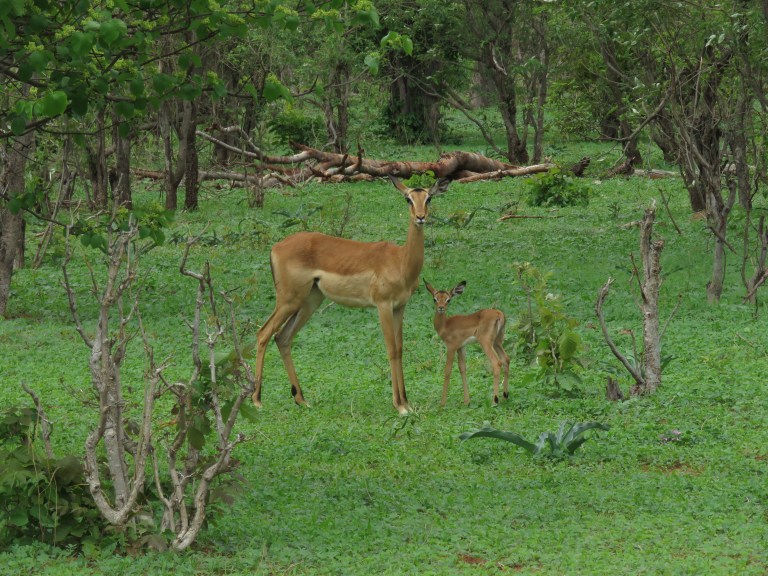
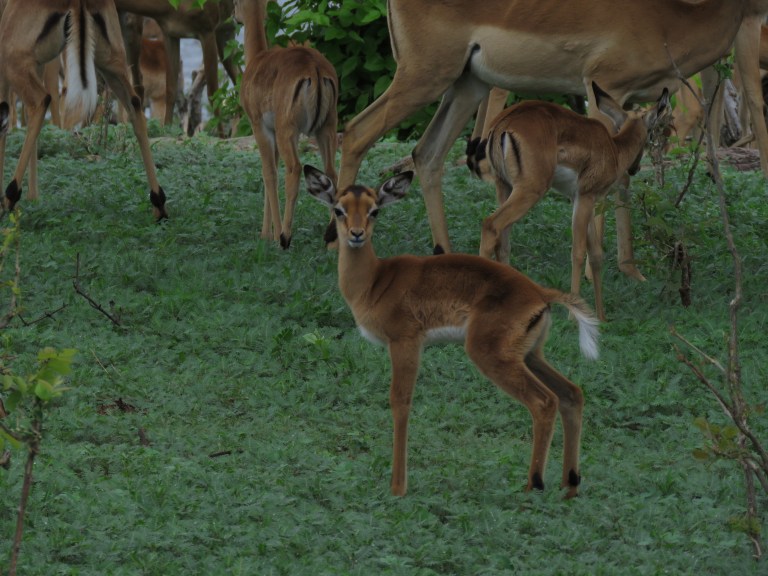
Once male impalas reach adulthood they are kicked out of the ladies and kids herd and must join the bachelor herd. At least, we called them bachelors – usually referred to them as the bachelors club. And we took to referring to the ladies and kids groups as nurseries. There were so many impala that I asked why there were not more big cats …
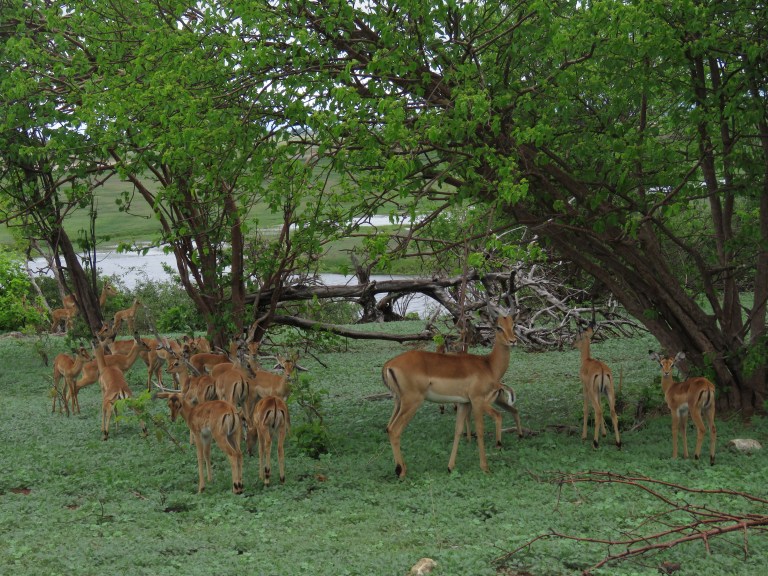
One of our guides called impala the “McDonald’s” of the jungle … cracked me up! And maybe this is because they are not the brightest – we did see impala very close to reclining lions at one point. I referred to them as suicidal impala – thinking that they were trying to get eaten by lions, that they could not face another day in the ho-hum of Chobe. But no, the guide claims they felt safe because they could see the lions – and they could outrun the lions, in that particular situation. I’m still not so sure about that one.
The impala are kind of like deer, they have white tails and tawny coats with black markings on their ankles and rear-ends – which is the only way you can really tell them apart from other antelopes like Red lechwe. They seemed to be a little bit on the edge all the time, ready to spring off at any moment – which makes sense if you are the preferred food source for all the predators out there.
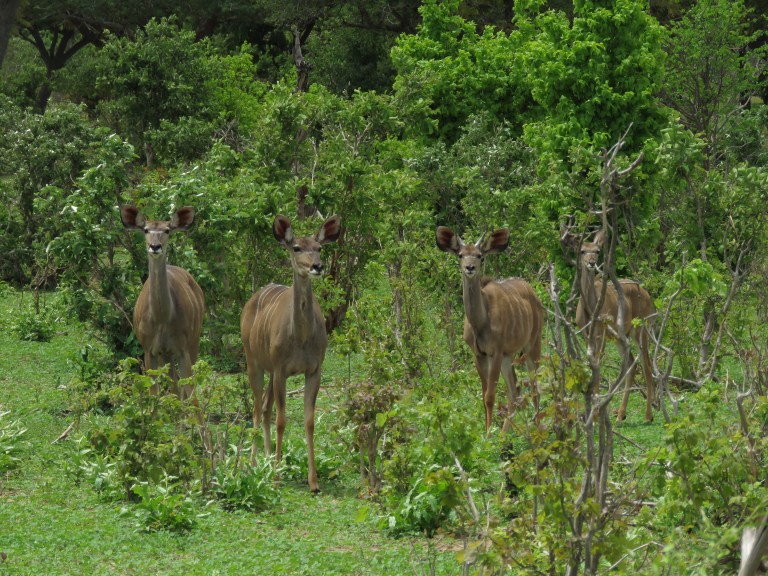
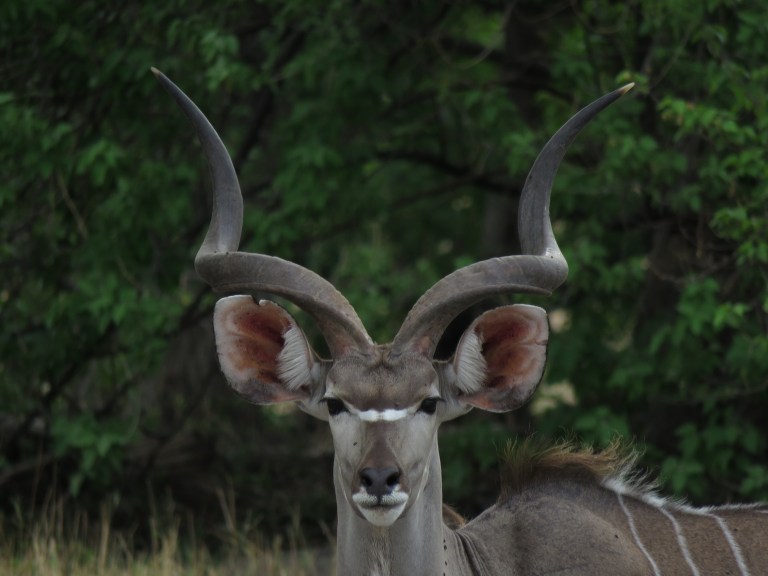
Kudu are one of my favorite antelopes. They have an interesting camouflage scheme of thin white stripes on their bark colored coats – and I tell you, they really blend into the trees – we had a hard time picking them out. But the best feature they have are these funky mickey mouse ears. Incongruous on an antelope – but made for fabulous expressions on their faces. and they are much larger than impalas and Red lechwe. The males have great corkscrew horns. Kudus are notorious jumpers and cause many traffic accidents when they try to jump over a moving vehicle… There were warning road signs in many areas displaying a leaping kudu.
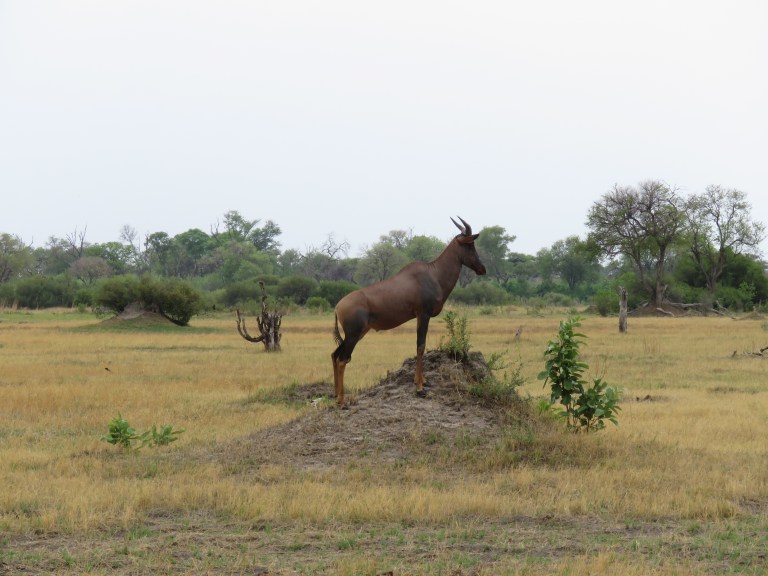
Tsessebe are the fastest antelopes out there. Considering their size this seems unlikely. They are larger even than the Kudu and seem to be shaped with an upwards slope from tail to head. They are a deep reddish-brown in color and have what appear to be patchy black stockings on their legs. There would always be one tsessebe who liked to stand on a termite mound – regally surveying the plain – King of the Plains. I never really saw a group of tsessebe take off at lightening speed – though did see several gallivanting about and even relaxed they covered a lot of ground with leaps and bounds.

Waterbucks are similar in size to the tsessebe and kudu – but they have a target on their rear end. That’s right – a big white bulls eye. Makes you wonder about what mother nature was thinking – but it turns out this is to help them. The guides call it the ‘follow me’ signal. In times of stress if one waterbuck heads for the hills – the others just have to sight the white target and follow it. Same thing goes for the impalas following those black and white ankles and rear ends. Several different species have this type of coloring or design to help the entire group flee from danger.
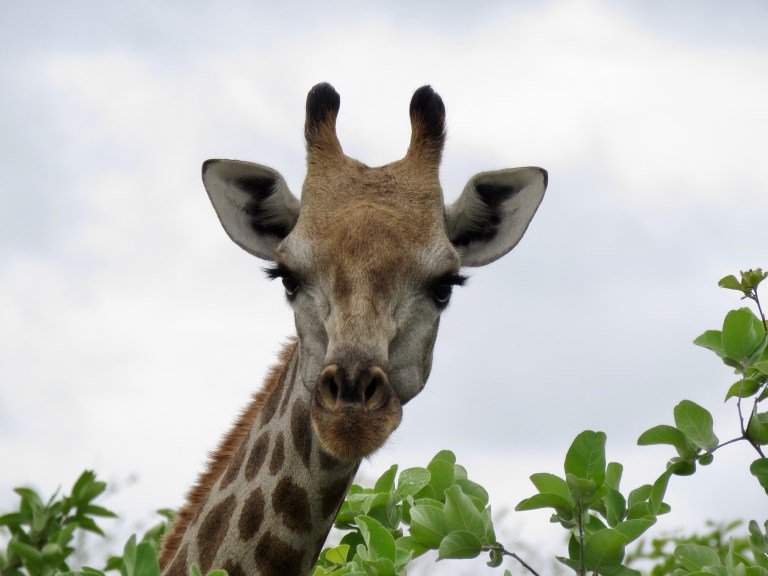
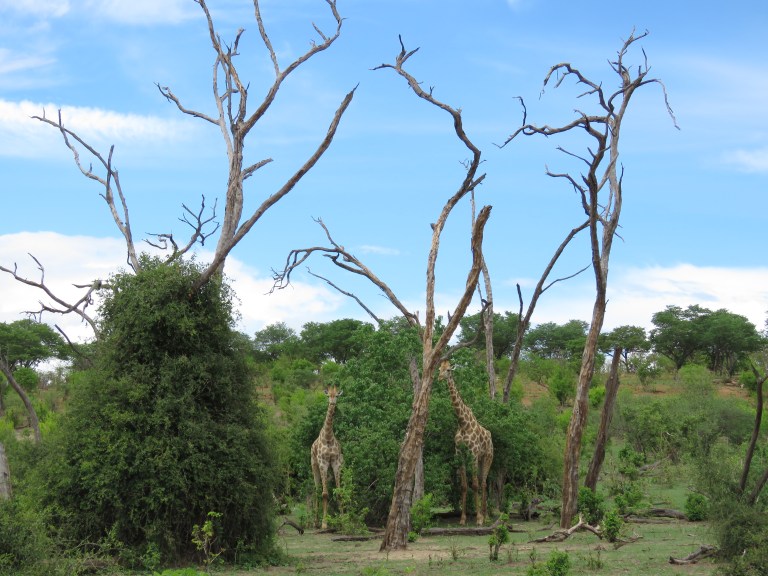
The most graceful animal I saw, full of elegance and poise – was the giraffe. Another animal that sneaks up on you – they are very quiet and hide in plain sight, heads mixed in with the tops of trees. Sometimes you had a sneaking suspicion that you were being watched – and looked up to see giraffes, blending in with the brush around them. Up close they have beautiful thick-lashed eyes – with black irises, it was like looking into a black-eyed Susan flower. We saw a couple of male giraffes attempt to have an altercation. At least one of the males made several concerted efforts to neck butt his larger and taller buddy, who ignored him. This is how the males fight – they bang against each others necks with their horns. You can always tell the males from the females because they have thicker horns with the hair rubbed off – due to these out of hand fighting sessions. Compared to hippo combat – the giraffes just looked foolish…

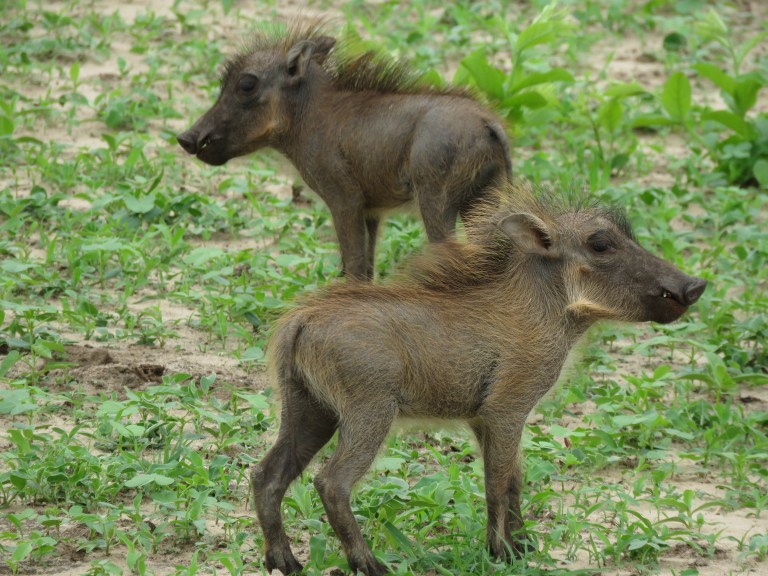
My other favorite creature (yes, I’m starting to have several) – are the warthogs. Every time I saw warthogs it was always a family – momma, poppa, and wee bairns. Baby warthogs are the cutest thing on the planet. I don’t care if they are part of the ‘Ugly Five’ they are just darling.
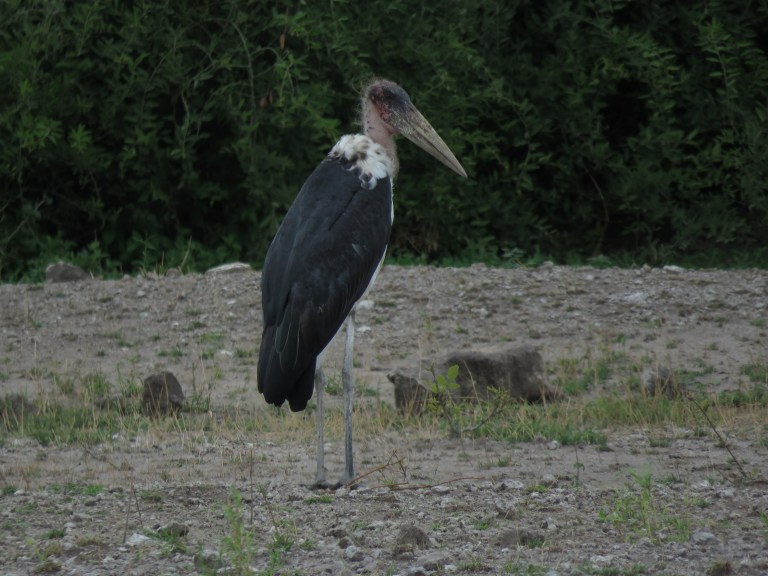
What’s the Ugly Five you ask? Let me enlighten you. I imagine you are aware of the Big Five – these are the most sought after animals in the bush: elephant, lion, Cape buffalo, rhinocerous, and leopard. Today this has become an advertising slogan – many of the game reserves are keen to advertise that they have the Big Five. (little Five: Leopard tortoise, Elephant shrew, antlion, Rhino beetle, Buffalo weaver) This came about because back in the day these five animals were the most difficult to kill – so big game hunters referred to them as the Big Five. The Ugly Five is another advertising gimmick and is a list of the ugliest critters out there: wildebeest, marabou stork, warthog, vulture and hyena. I don’t know who decided on the ugly list – but I’d agree it’s fairly accurate.
Anyhoo, back to the warthogs – fascinating creatures and watching them romp around, all that I could picture in my head was Pumbaa! (If you don’t know who Pumbaa is – get out from under your rock!). I kept waiting for them to break into a song and dance routine, but alas no, only in my head. Warthogs are big eaters and usually we saw them on their knees their jaws mowing through the underbrush. Amazing – it’s easier for them to bend knees in order to move their mouth to the ground, because they don’t really have a neck, so more challenging to bend the head down from a standing position. It makes for a very interesting pose.

The lady warthogs are the male warthogs reduced in size. They are not the most attractive females, being the color of rusty pipes with a weird mane-like ruff around their neck and shoulders. The babies resemble baby piglets – just uglier… Cute little snouts and much less of the ugly ruff – just a few random hairs here and there. The best thing is to see warthogs run – the tail goes straight up in the air and it has a little fringe at the top – this is the warthog follow me sign – even the wee bairns do it! (Pumbaa lives!) Don’t mess with the male warthogs though – they have dangerous looking tusks and are more aggressive – we always gave them a wide berth.
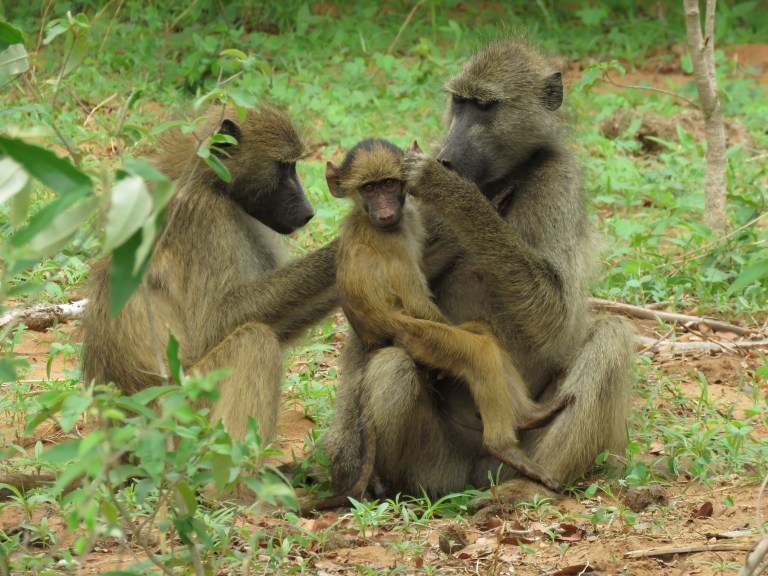
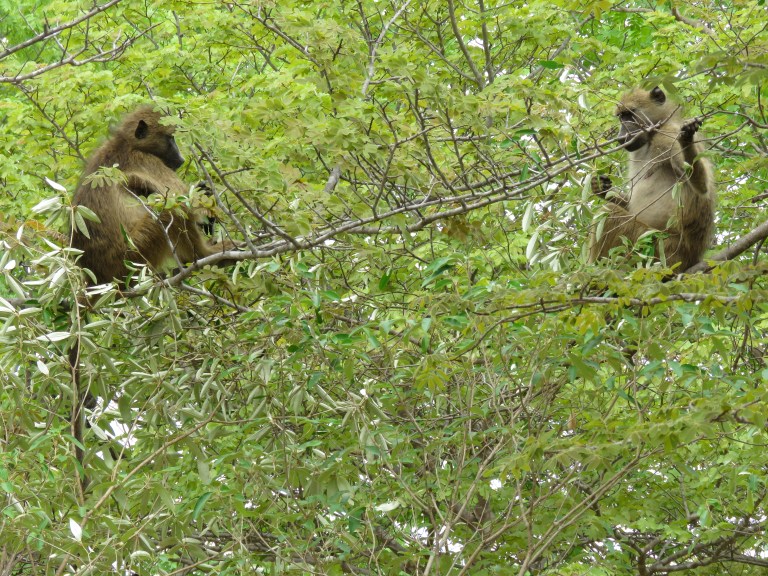
What about monkeys and baboons? I saw more baboons than you can shake a stick at … Whole troops of baboons busy eating tree leaves and grooming their friends and neighbors. Baboons are damn ugly. They have oddly shaped rear-ends that are devoid of fur (pads for sitting – it turns out). They are ungainly, noisy, insouciant creatures. Much larger in real life than what you’ve seen on the tv. We did see moms with babies in tow scampering across the roads. They seemed nonchalant about the jeeps – good or bad depending on your issues with closeness to critters. Baboons can open doors – so at one camp we had door chains on the outside – apparently those stump them. I did see a baboon going through garbage at one camp and pulling out a coke can, holding it up and peering into it – eventually tossing it away deemed inedible.
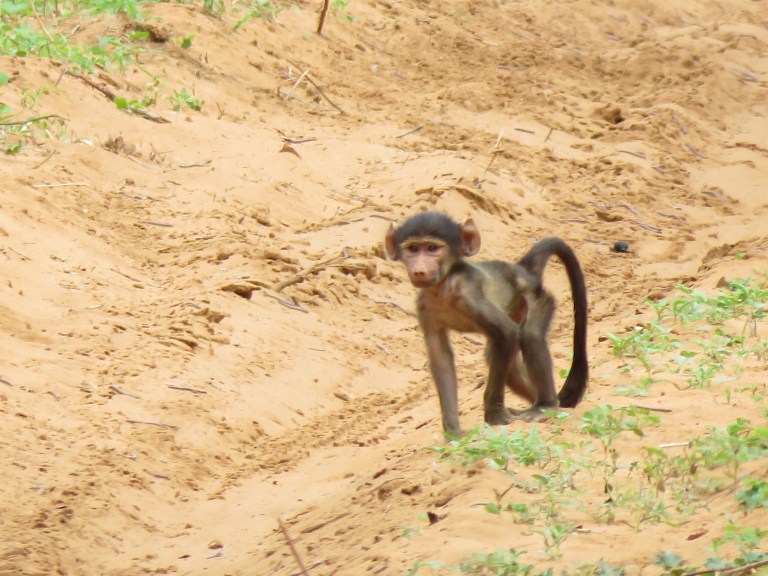
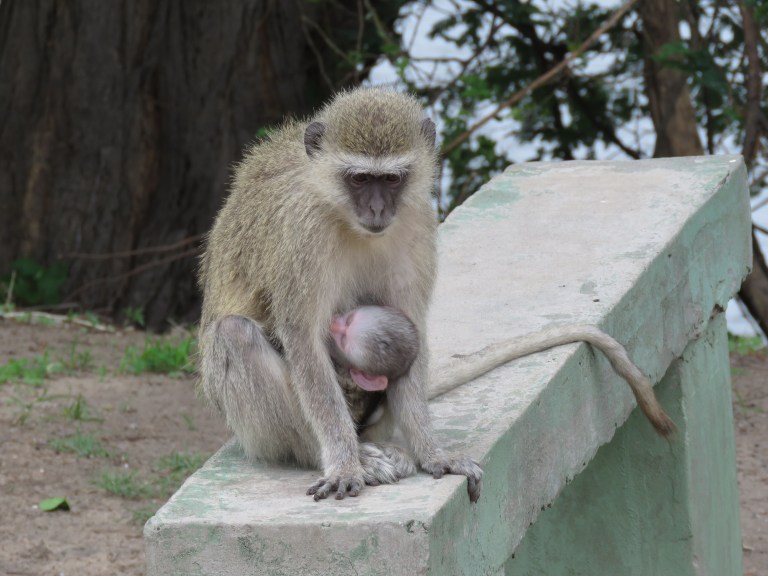
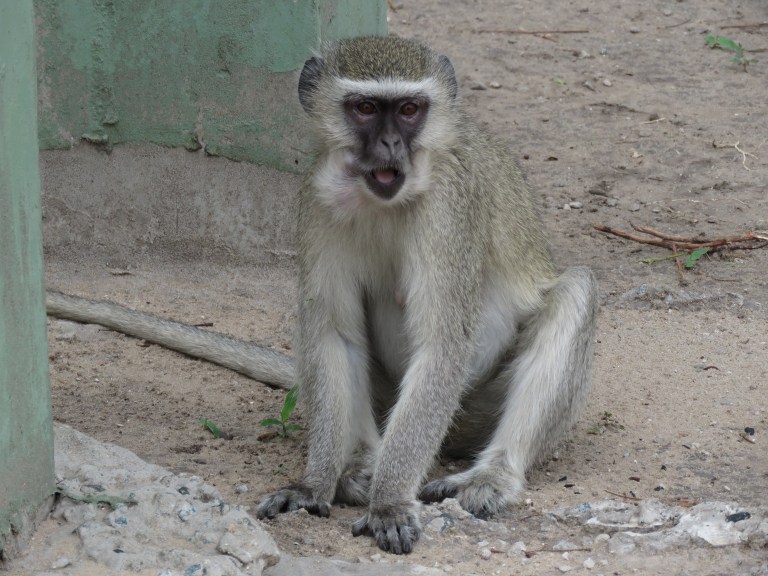
On the other hand, monkeys have eerily human faces. We only saw Vervet monkeys – salt and pepper fur with chocolate leather faces – resembling old men. They have white monobrows, white sideburns and white mustaches. Cuckoo banana, I’m telling you! It’s spooky… These guys were kind of shy – I did not get too many shots of the monkeys (my namesake too!)
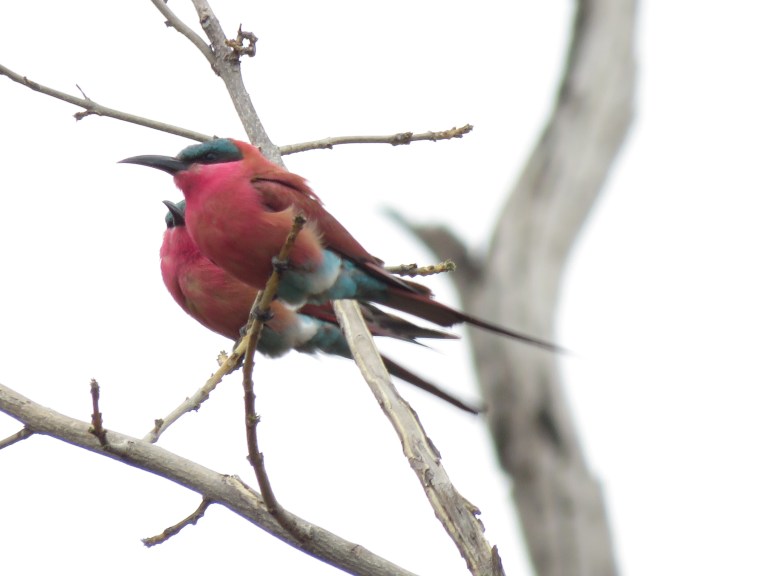
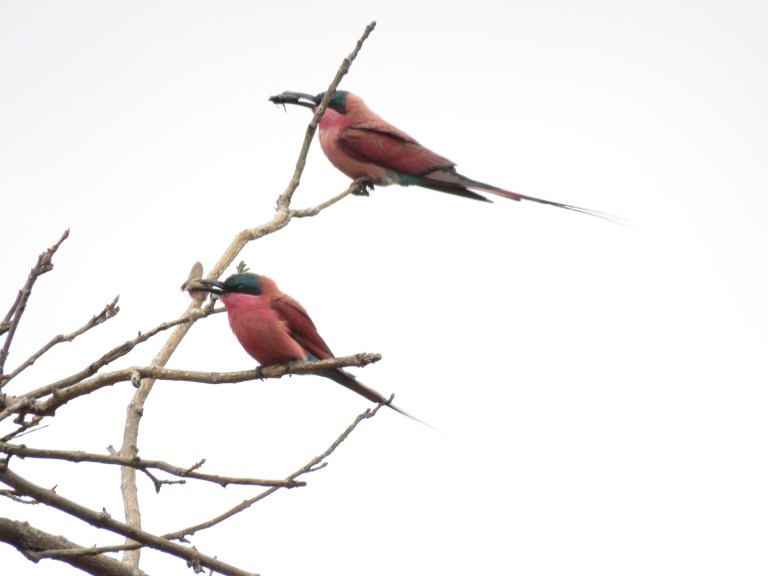
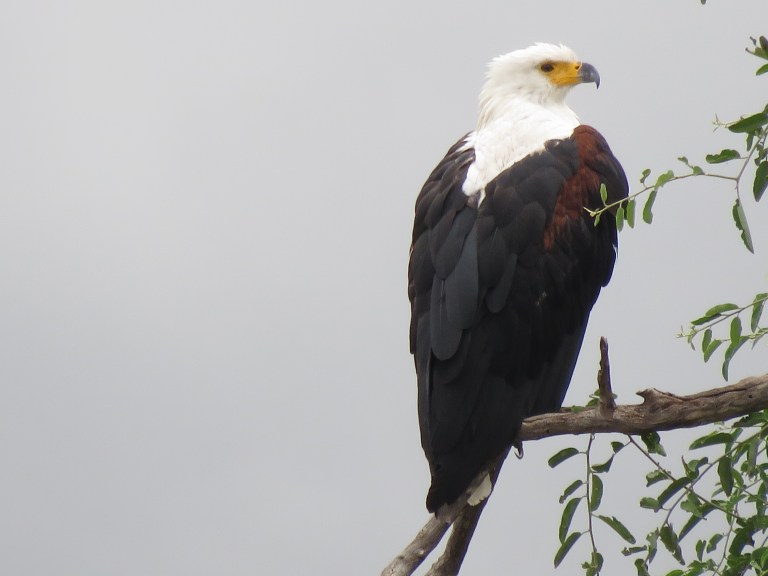
One last group before I sign off – the birds. Fabulous and brilliantly colored bee-eaters next to kingfishers, eagles, storks, you name it. Hundreds of different types of birds in all shapes and sizes. The vermilion colored hoopoe, the heinously ugly marabou stork, and the beautifully upholstered Lilac-breasted roller. I found that it was a challenge to get good shots of the birds – but oddly enough I really enjoyed doing it!
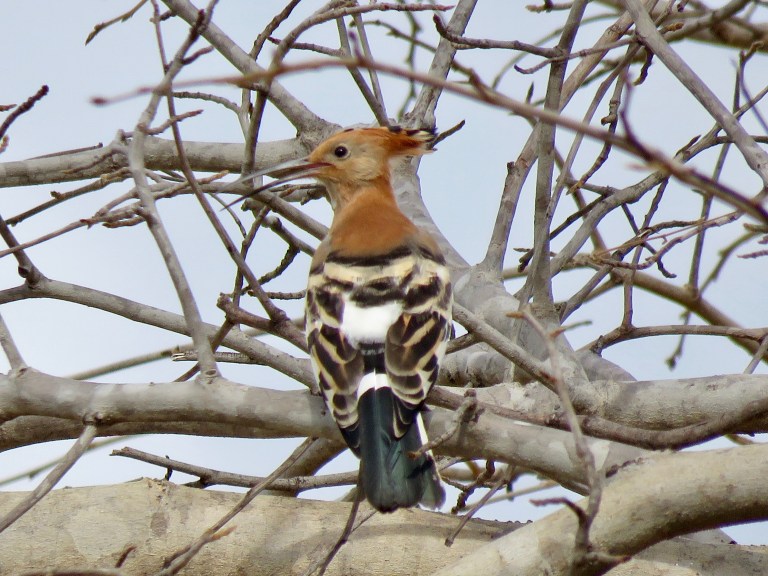
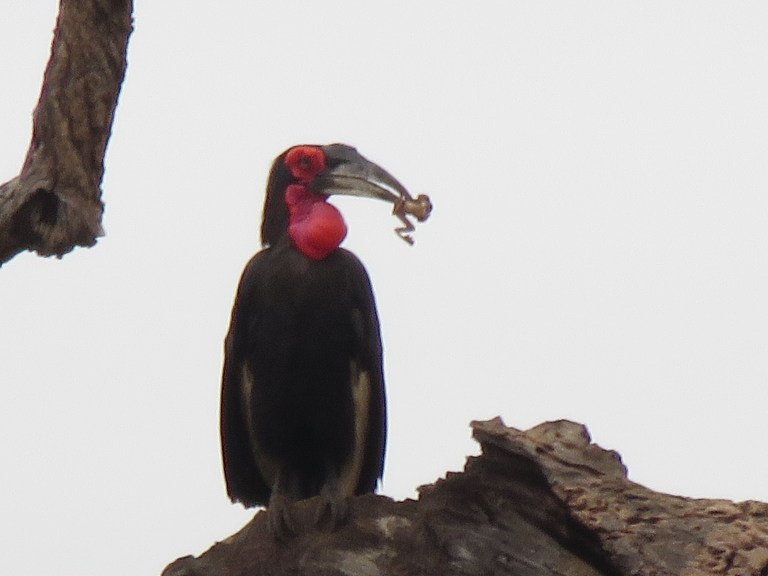
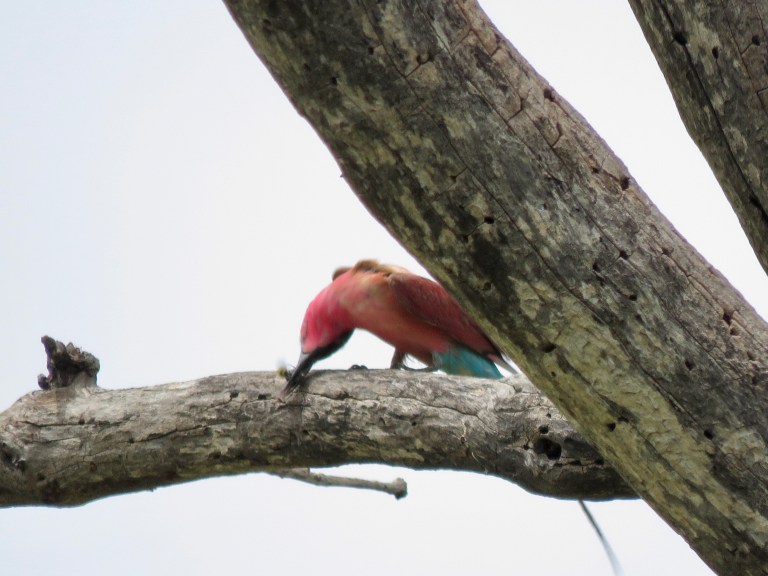
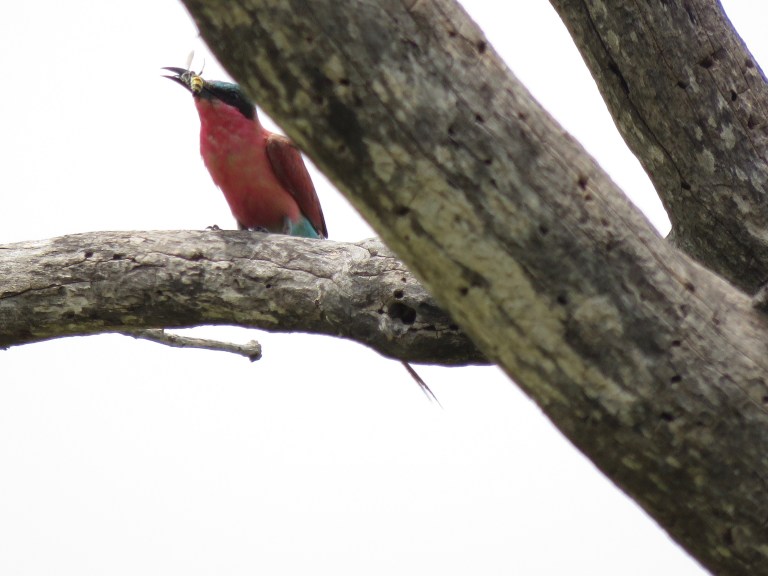
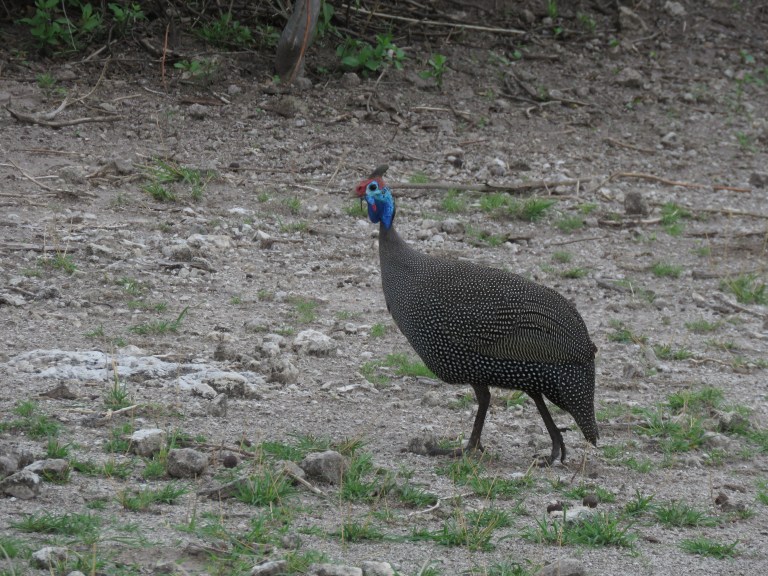
We saw Guinea fowl everywhere – reminiscent of barnyard chickens – they seemed to scatter in all directions at the slightest provocation. I likened them to fancy ladies in polka-dot skirts. One night for dinner I had Guinea fowl – and it was fabulous – like dark turkey meat… That was before I had seen them in the wild (insert sad face here).
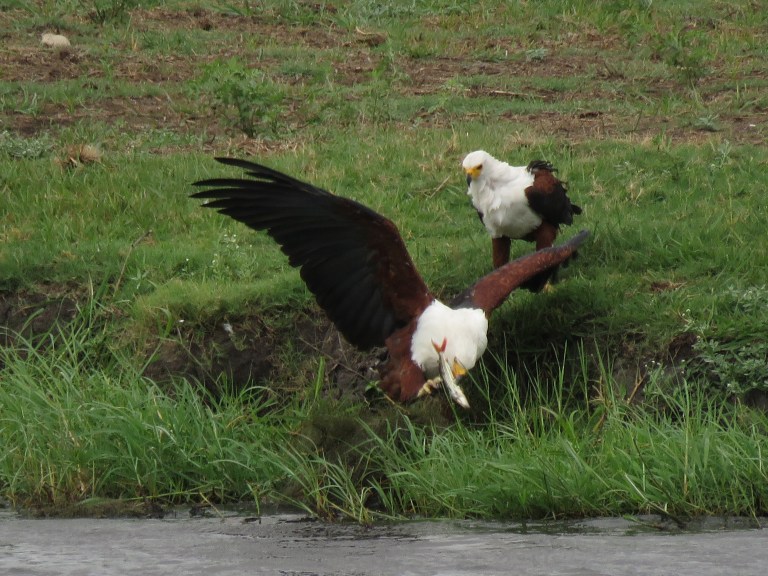
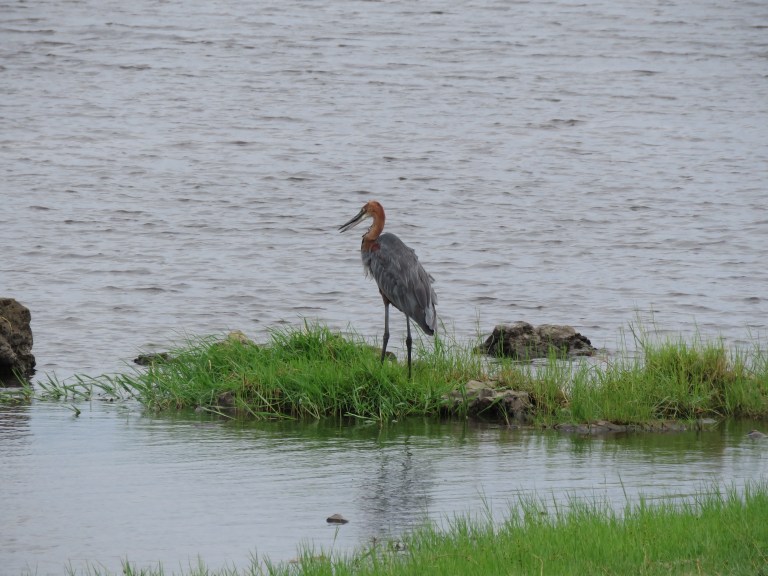
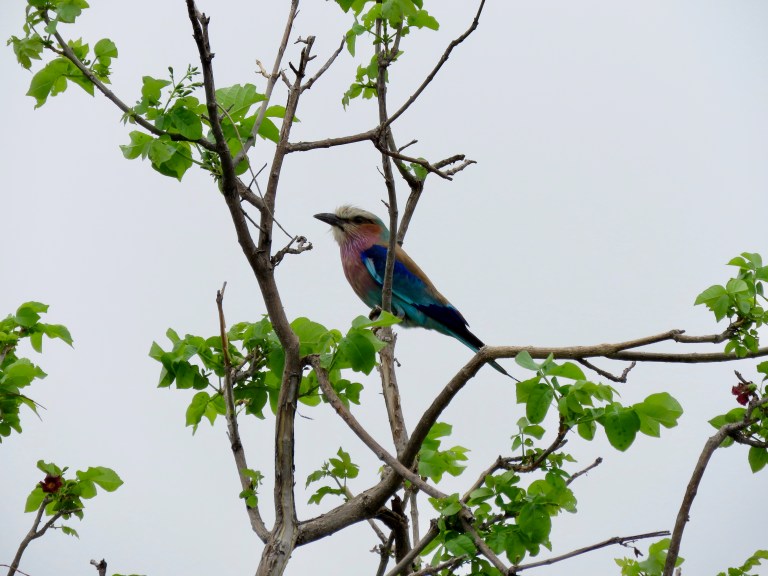
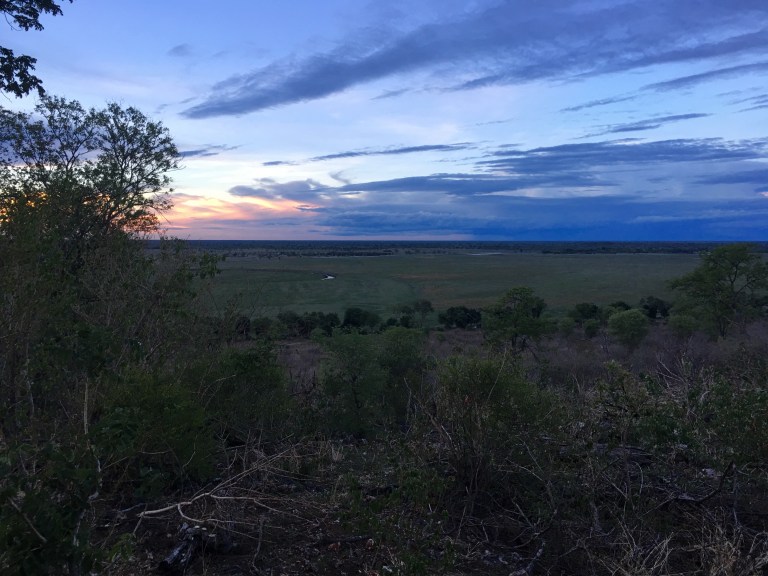
I’ll sign off here – one last picture from my stay at Chobe – the sun setting from the back of my cabin…
 The Minkey Blog
Spectacular…